
Skip to content

China Best Industrial Thermal Transfer Labels Manufacturer

Industrial Thermal Transfer Labels support traceability, safety, and product identification across demanding manufacturing environments. China remains a major sourcing hub for label materials, printing equipment, and converting expertise. However, “best” should mean verified performance, not simply a low quotation.

Smithers’ industry analysis, The Future of Industrial Labels to 2028, highlights durable identification as a continuing requirement in manufacturing, logistics, and equipment markets. Its findings align with customer needs for labels that resist abrasion, moisture, chemicals, heat, and prolonged outdoor exposure. Thermal transfer printing remains practical because resin and wax-resin ribbons can produce sharp, stable images on synthetic stocks. That matters when a small serial number must remain readable on a dusty metal enclosure.

The Thermal Transfer Ribbon Market reports published by MarketsandMarkets also identify automation, logistics growth, and durable coding needs as important demand factors. These trends create opportunities for experienced Chinese manufacturers with controlled coating, slitting, printing, and inspection processes. Strong suppliers should provide material specifications, ribbon compatibility data, sample testing, and documented quality procedures. ISO 9001 certification can support process reliability, but it cannot replace real application testing.

A label may pass a factory inspection and still fail outdoors. That uncomfortable detail deserves attention. Adhesive choice, surface energy, ribbon settings, and storage conditions can change results. Experienced manufacturers therefore test finished labels against the customer’s actual substrate and environment. Buyers should review barcode verification, batch traceability, color consistency, and export packaging before placing large orders. Reliable partnership is built through evidence, not confident claims.
China Best Industrial Thermal Transfer Labels Manufacturer

What Are Industrial Thermal Transfer Labels?

China Best Industrial Thermal Transfer Labels Manufacturer

What Are Industrial Thermal Transfer Labels?

Industrial thermal transfer labels are identification labels printed with heat. A thermal printhead transfers ink from a ribbon onto the label surface. This process creates sharp text, barcodes, serial numbers, and warning symbols.

They are built for work.

Unlike ordinary paper labels, industrial versions can use polyester, polypropylene, or other durable films. These materials resist moisture, abrasion, chemicals, sunlight, and changing temperatures. Their adhesive also matters. A label for painted metal may need different bonding strength than one used on plastic containers.

In practical production, these labels support equipment tracking, warehouse control, electrical panels, cable identification, and product packaging. A clear barcode should remain readable after handling, storage, and transport. Small details matter, including ribbon compatibility, surface texture, label width, and printer heat settings. Poor calibration can cause faded print or excessive ribbon wrinkles.

A label can still fail.

I have found that laboratory testing alone may not reflect actual use. Dust, oil, condensation, and repeated cleaning can change performance. Reliable selection requires testing samples on the real surface and under expected conditions. Record the temperature, cleaning method, exposure time, and scanning results. This evidence supports better purchasing decisions and reduces avoidable rework. The most suitable industrial thermal transfer label is not simply the thickest one. It is the label matched to its environment, application process, and service life.

Key Materials and Construction of Thermal Transfer Labels

China Best Industrial Thermal Transfer Labels Manufacturer

Thermal transfer labels rely on three bonded layers: face stock, adhesive, and release liner. Face stock may use coated paper, polyester, or polypropylene. Polyester withstands abrasion, moisture, and many industrial chemicals. The ribbon transfers wax, resin, or blended ink through controlled heat. Resin ribbons usually deliver sharper, longer-lasting images. Adhesive selection matters equally. Permanent acrylic adhesives suit rough surfaces and temperature changes. Rubber-based adhesives often provide faster initial tack. Smithers’ report, The Future of Labels and Labeling to 2028, identifies durability and traceability as continuing priorities across industrial labeling. Material choices should follow actual service conditions, not only purchase price.

Construction details can change performance. A smooth coating improves print density and reduces ribbon breakage. A stable liner supports clean die-cutting and automatic dispensing. Poor winding can create edge damage, wrinkles, or uneven feeding. According to Grand View Research, the global printed labels market reached approximately USD 48 billion in 2023. That scale increases pressure for reliable, efficient label production. Yet specifications are still sometimes copied without testing. That is a weakness. Temperature cycling, solvent exposure, and adhesion tests should be completed before approval.

Tips: Match ribbon chemistry with the face stock. Test labels at the lowest expected temperature. Check barcode grades after abrasion. Leave a small tolerance for printer heat settings. Field results may differ from laboratory results. Keep that uncertainty visible.

How Industrial Thermal Transfer Labels Are Manufactured

China Best Industrial Thermal Transfer Labels Manufacturer

Industrial thermal transfer labels begin with material selection. Manufacturers choose polyester, polypropylene, or coated paper for the working environment. Synthetic films resist moisture, abrasion, and many industrial chemicals. Adhesive choice depends on surface energy, temperature, and application speed.

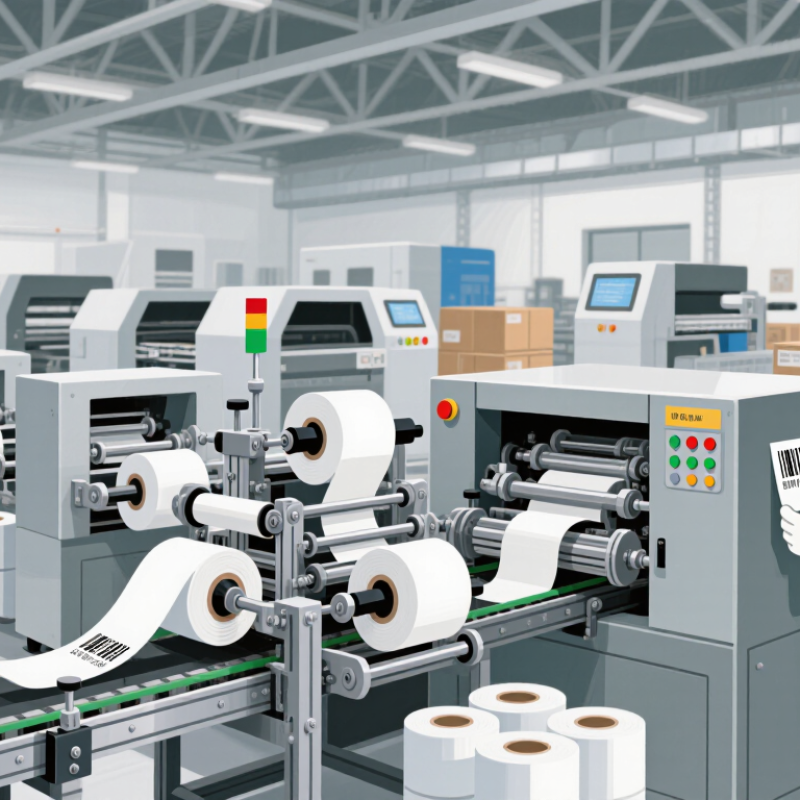
The production line starts by cleaning and treating the face material. A controlled coating unit applies adhesive evenly across the web. Heat and airflow remove moisture without distorting the film. The coated material then passes through inspection cameras. They check pinholes, wrinkles, coating weight, and edge damage. A small mistake matters.

The web is slit into narrow rolls for thermal transfer printers. Operators control winding tension carefully. Excessive tension can deform the core or cause telescoping. Testing follows ISO/IEC 15416 principles for barcode print quality. Labels are printed at different speeds, temperatures, and ribbon settings. Samples also face water, rubbing, cold storage, and heat exposure. According to Smithers’ 2024 outlook, the global printed-label market exceeds US$50 billion, increasing pressure for consistent production. Industry surveys from PMMI also continue to identify traceability and readable identification as major packaging priorities. Yet laboratory results can mislead. A label that performs well on clean steel may fail on dusty plastic. Field trials remain essential.

Performance Standards for Industrial Label Applications

Industrial thermal transfer labels must remain readable through handling, storage, and routine production stress. Performance standards should match the application, not only the printer setting. A label for a metal component may face oil, abrasion, heat, moisture, or repeated scanning. Material selection must consider surface energy, texture, and application temperature. Adhesion testing should begin after curing, not immediately after pressing.

Real production experience reveals hidden weaknesses. A label may pass a short rub test but fail after weeks of vibration. Another may resist chemicals yet curl around a narrow cable. We evaluate print contrast, barcode readability, edge lift, smear resistance, and dimensional stability. Test samples should remain on actual substrates whenever possible. Laboratory results alone can mislead.

Relevant quality programs often reference ISO-based barcode verification, environmental conditioning, and documented process controls. However, standards do not replace application-specific testing. We record batch details, ribbon settings, dwell time, and failure conditions. This creates traceability and supports corrective action. Small variables matter. Dust matters too.

A reliable qualification plan includes accelerated aging, abrasion cycles, humidity exposure, and temperature changes. Acceptance limits should be measurable and agreed before testing. We also review rejected samples instead of hiding them. That part is uncomfortable, but useful. Industrial labels are dependable only when performance evidence reflects the real workplace.

How to Choose China’s Best Thermal Transfer Label Manufacturer

Choosing China’s best industrial thermal transfer label manufacturer requires more than comparing prices. A capable supplier should understand your application, surface type, temperature range, and expected service life. Ask for material specifications, adhesive data, ribbon compatibility, and batch traceability. Request samples using your actual packaging or equipment. Small details matter. A label may look sharp indoors but fail after moisture, abrasion, or repeated handling.

Review the factory’s quality process, not only its product catalog. Confirm incoming material checks, print inspection, roll tension control, and final sampling records. Independent certifications can support credibility, but verify their scope and validity. Factory communication also matters. Technical staff should answer directly and explain limitations. Vague promises are warning signs. A polished website proves little.

Tips: Compare samples under real conditions. Test readability after rubbing, heating, and cooling. Check whether the supplier can maintain consistent color, dimensions, and adhesive performance across repeat orders. Discuss lead times, packaging, replacement procedures, and production records before signing. Do not choose the cheapest offer automatically. It may reduce initial cost but create relabeling work later. Your evaluation may still miss something; review test results with your production and quality teams.

How to Choose China’s Best Thermal Transfer Label Manufacturer

This recommended evaluation model prioritizes print quality, material compatibility, production consistency, compliance, delivery capability, and total cost. Buyers can adjust the weighting according to their application, order volume, and market requirements.

Call free on
0800 1954 538