
Choosing the best Dumper Tracks in 2026 requires more than matching a track width to a machine model. Real performance depends on terrain, load weight, operating hours, and undercarriage condition. A track that works well on dry gravel may struggle in wet clay. Small differences matter.
Start with the jobsite. Inspect the ground after rain, not only during ideal conditions. Mud packed around the sprocket can increase wear and reduce steering response. Rocky surfaces may demand stronger carcass construction and deeper tread protection. Rubber tracks often provide quieter operation and less surface damage, while steel tracks can suit harsh, abrasive environments. Neither option is perfect.
Machine compatibility must remain the anchor. Verify width, pitch, link count, guide design, and sprocket engagement against reliable manufacturer specifications. Experienced technicians should also check roller alignment and tension before installation. Incorrect tension can create premature wear, even when the tracks appear high quality. That detail gets overlooked.
A practical comparison should include compound quality, tread pattern, warranty terms, delivery availability, and replacement support. Ask how the tracks performed on similar machines and sites. Photos help, but service records offer stronger evidence. A low purchase price may become expensive after repeated downtime. Still, premium pricing does not guarantee the best result. Supplier claims need testing.
This guide examines the decisions that experienced operators, fleet managers, and maintenance teams face. It also recognizes an uncomfortable truth: no checklist can predict every jobsite. Soil changes. Operators differ. Careful inspection remains essential.
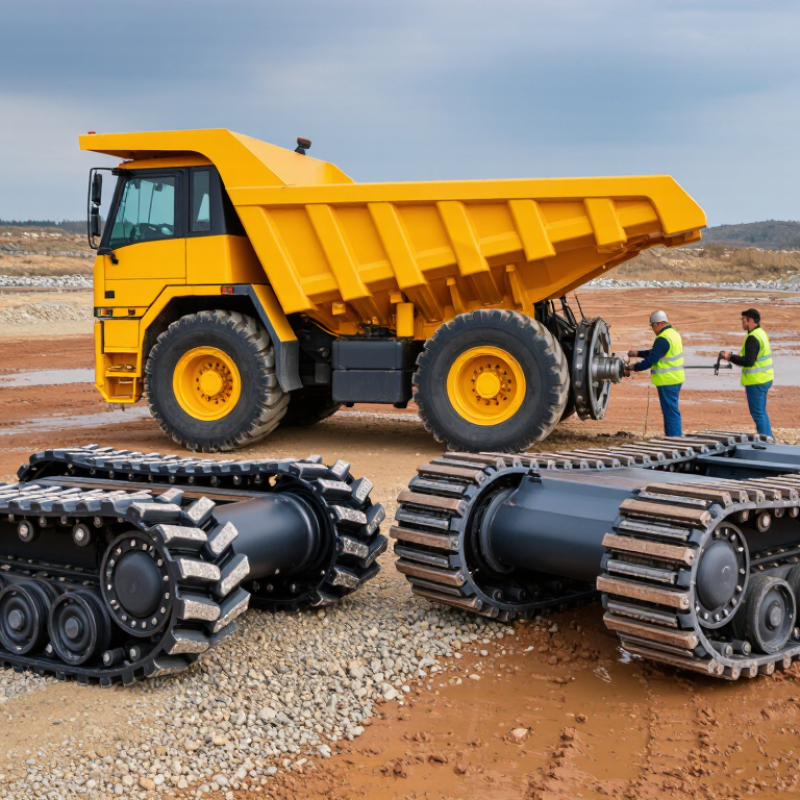
Choosing the best dumper tracks starts with the worksite, not the machine’s advertised load rating. Rubber tracks suit landscaping, gardens, and finished surfaces. They reduce ground marking and usually create less vibration. Steel tracks perform better on sharp rock, demolition debris, and deep mud. Their heavier shoes can resist cuts, but they may damage paved areas.
Tracked dumpers also differ by body design. A standard skip handles soil and aggregate on narrow construction routes. A high-tip model unloads into tall containers or over walls. Swivel skips help when the machine cannot turn safely near foundations. Wide tracks lower ground pressure, which matters on wet clay or soft woodland paths.
The 2024 Fortune Business Insights construction equipment report valued the global market at USD 208.3 billion in 2023. That figure reflects broad equipment demand, not guaranteed dumper performance.
Check track width, tread depth, undercarriage clearance, and rated payload together. A 1,000-kilogram payload means little if the route has steep, slippery sections. Field experience also shows that operators often overlook turning damage. Aggressive counter-rotation can wear rubber quickly. Steel tracks are not automatically better. They can add noise and transfer harsh shocks through the frame. I would inspect the site after rain, measure the narrowest access point, and ask for ground-pressure data. Manufacturer charts help, but they cannot replace a real route trial. Even experienced buyers sometimes choose extra capacity they never use. That mistake increases transport, fuel, and maintenance costs.
How to Choose the Best Dumper Tracks in 2026?
Assessing Load Capacity, Terrain, and Operating Conditions
Choosing dumper tracks starts with the material, not the machine’s advertised maximum load. Wet soil, crushed stone, and timber can behave very differently during transport. Check the rated payload, then leave a practical margin for uneven ground and sudden braking. An overloaded dumper may move slowly, strain its structure, and become unstable on slopes.
Terrain changes the decision. Wide tracks usually reduce ground pressure on soft fields, muddy construction sites, and recently graded soil. Narrower tracks may suit firm paths where clearance matters more. Inspect the track pattern closely. Deep lugs can improve grip, but they may disturb finished surfaces. I have found that traction is not always the main issue. Turning space can decide whether a machine is useful.
Operating conditions deserve equal attention. Frequent short trips require responsive controls and easy access for daily checks. Long shifts demand comfortable seating, cooling performance, and simple maintenance points. Cold mornings, heavy rain, and dusty work areas can expose weak components quickly. Review the operator’s manual and match its limits to the actual site. A larger capacity looks attractive, yet it may increase fuel use and ground damage. That trade-off is easy to overlook. Record payloads, slope conditions, and track wear during the first weeks. Those notes often reveal whether the original choice was genuinely suitable.
| Tracked Dumper Class | Typical Rated Payload | Typical Operating Weight | Typical Overall Width | Typical Ground Pressure | Best-Suited Terrain | Recommended Operating Conditions | Key Selection Considerations |
|---|---|---|---|---|---|---|---|
| Micro / Walk-Behind | 0.25–0.75 metric tonnes | 0.6–1.5 metric tonnes | 0.70–1.10 m | Approximately 20–45 kPa | Garden paths, narrow access routes, landscaped areas, and light construction sites | Short-haul movement of soil, mulch, gravel, demolition waste, and planting materials | Choose this class when access width and low disturbance are more important than production speed. |
| Compact Tracked Dumper | 0.75–1.50 metric tonnes | 1.5–3.0 metric tonnes | 0.95–1.50 m | Approximately 25–55 kPa | Soft ground, uneven residential sites, muddy paths, and moderate slopes | General earthmoving, utility trenching, landscaping, and small-scale site preparation | Provides a practical balance between transport capacity, maneuverability, and limited ground damage. |
| Medium Tracked Dumper | 1.50–3.00 metric tonnes | 3.0–6.0 metric tonnes | 1.50–2.20 m | Approximately 35–70 kPa | Construction sites, forest tracks, gravel surfaces, clay, and irregular terrain | Longer haul distances, aggregate transport, foundation work, road maintenance, and site clearance | Verify loading compatibility with excavators and confirm that ramps, bridges, and access roads support the gross machine weight. |
| Heavy Tracked Dumper | 3.00–6.00 metric tonnes | 6.0–12.0 metric tonnes | 2.00–2.80 m | Approximately 45–85 kPa | Quarries, major infrastructure projects, steep haul routes, and demanding off-road conditions | High-volume movement of blasted rock, aggregate, overburden, and wet or cohesive soil | Prioritize hydraulic cooling, structural durability, payload stability, braking performance, and service access. |
| High-Capacity Crawler Dumper | 6.00–15.00+ metric tonnes | 12.0–30.0+ metric tonnes | 2.50–3.50+ m | Approximately 60–110 kPa | Large infrastructure works, mining support, major earthworks, and very rough haul roads | Continuous production cycles with dedicated loading equipment and engineered haul routes | Confirm transport permits, road width, turning radius, bridge limits, tire or track configuration, and total cost per tonne moved. |
Values are typical industry ranges for tracked dumpers and vary by payload configuration, body type, track width, attachments, fuel level, and operating equipment. Always use the manufacturer’s rated payload, maximum gradient, ground-pressure specification, and gross vehicle weight for final selection.
Choosing the best dumper tracks starts with the material, not the price. Standard rubber tracks suit construction yards, landscaping, and mixed surfaces. They reduce vibration and protect paved ground. Reinforced rubber compounds resist cuts, while steel cores improve load stability. However, harder rubber is not always better. It may last longer on concrete but perform poorly on sharp rock.
Tread pattern determines how the dumper transfers power. Deep, open lugs clear mud and wet soil effectively. Closely spaced blocks provide smoother travel on compact ground. A wider tread can reduce ground pressure, especially near drainage trenches or soft fields. Check the tread depth, lug edges, and inner guide area before buying. Uneven wear often signals incorrect tension, damaged rollers, or repeated overloading. It is easy to blame the track.
Durability depends on operating habits as much as construction. Clean stones from the undercarriage after each shift. Avoid turning sharply on abrasive surfaces when possible. Record operating hours and inspect for exposed steel, cracks, and missing lugs every week. A track rated for heavy work can still fail early under heat, excessive tension, or careless loading. Field conditions change, so one pattern may not suit every site. That detail is often missed.
Compatibility should be checked before price. Match the track width, pitch, roller layout, sprocket profile, and machine operating weight. A track that fits physically may still load the final drive incorrectly. Measure the undercarriage, not only the old track. The Association of Equipment Manufacturers reported continued growth in compact equipment demand in its 2024 market outlook. That suggests more mixed-fleet use, where incorrect track selection can create avoidable downtime. My field experience is simple: muddy sites expose poor fit quickly.
Maintenance needs change the real purchase price. Inspect tension weekly, remove trapped stones daily, and check roller wear during every service interval. The U.S. Bureau of Labor Statistics reported a 3.9% annual increase in producer prices for machinery repair and maintenance during part of 2024. Service costs are not standing still. Choose a track with clear wear indicators and accessible technical data. A cheaper track can become expensive after one damaged sprocket. I have seen this mistake.
Total cost should include installation, downtime, fuel effects, and expected service life. EquipmentWatch’s 2024 Cost Recovery report emphasizes ownership costs beyond the invoice price, including maintenance and depreciation. Request documented test results, warranty conditions, and application limits. Compare cost per operating hour, not cost per track. Still, published life estimates can disappoint in sharp rock, heat, or overloaded work. Recheck assumptions after 500 hours. That small review often changes the preferred option.
How to Choose the Best Dumper Tracks in 2026?
Selecting the right dumper tracks for 2026 requirements starts with the jobsite, not the catalogue. Measure the machine’s operating weight, loaded capacity, and track dimensions carefully. A track that looks suitable may still overload the rollers or reduce stability. I have found that muddy ground needs deeper tread patterns, while compacted gravel often benefits from smoother contact surfaces. Check the manufacturer’s technical data before ordering.
Consider rubber compound, steel reinforcement, tread spacing, and operating temperature. Reinforced tracks usually handle sharp aggregate better, but they may transmit more vibration through the chassis. Narrow tracks can improve access between buildings. Wider tracks reduce ground pressure on wet soil. Small details matter. Inspect the undercarriage first. Worn sprockets or damaged rollers can shorten the life of new tracks. A qualified technician should confirm alignment and tension settings.
For 2026 projects, maintenance access and total operating cost deserve equal attention. Choose tracks with clear inspection guidance and measurable wear indicators. Record hours, terrain, payload, and visible damage after each shift. This creates useful evidence instead of relying on memory. I once treated tread depth as the main buying factor, and that judgment was incomplete. Sidewall flexibility and daily cleaning mattered more than expected. Allow time for a practical trial, because laboratory specifications cannot fully predict every site condition.