
Choosing the best Zipper Pouch for bulk buying requires more than comparing unit prices. Packaging buyers must examine material structure, zipper performance, dimensions, print quality, and supplier consistency. A pouch that looks attractive in a sample may fail during filling, transport, or repeated opening.
Industry data supports this careful approach. Grand View Research valued the global flexible packaging market at approximately USD 261 billion in 2022 and expects continued growth through 2030. Smithers’ The Future of Flexible Packaging to 2028 also highlights rising demand for lightweight, convenient, and resource-efficient packaging formats. These trends make Zipper Pouch selection increasingly important for retailers, food brands, personal-care companies, and contract packers.
Start with the product itself. Dry goods may require a different barrier layer from oily products or moisture-sensitive powders. Check pouch thickness, seal strength, oxygen resistance, and zipper alignment. Request production samples, not only digital images. Test filled pouches by stacking them, shaking them, and opening them repeatedly.
Small details matter.
Bulk buying also depends on supplier reliability. Compare minimum order quantities, lead times, carton dimensions, defect-control procedures, and replacement policies. Ask for technical specifications and applicable food-contact or product-safety documentation. The Flexible Packaging Association notes that packaging performance depends on both material selection and converting quality.
A cheaper pouch is not always cheaper overall. Higher leakage rates, inconsistent printing, or delayed shipments can erase the initial savings. This is where buyers sometimes misjudge the order. A practical evaluation should balance cost, function, appearance, compliance, and supply stability before confirming a large purchase.
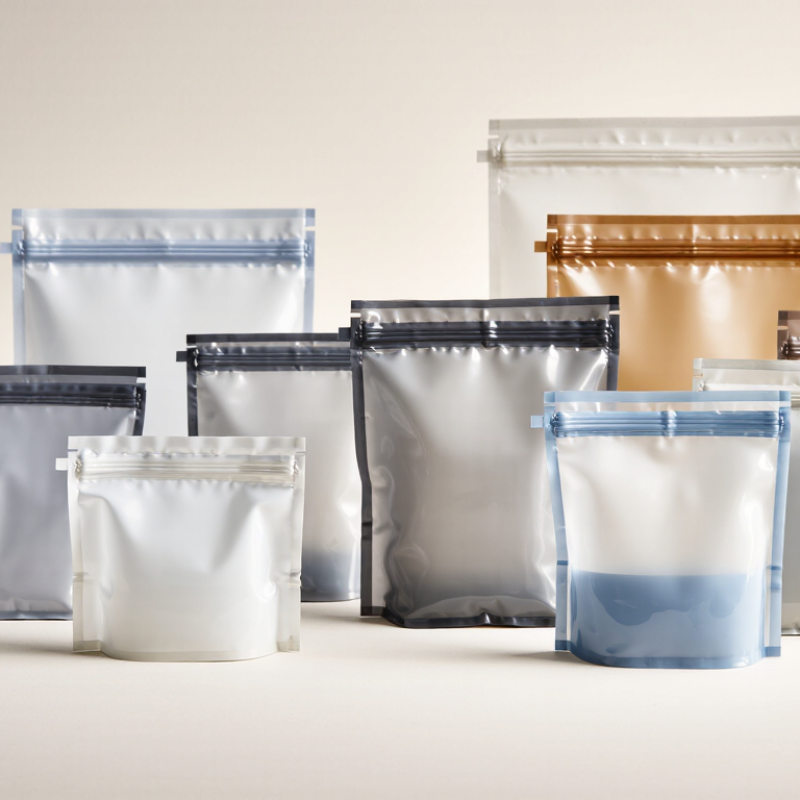
Before choosing a zipper pouch for bulk buying, define the product, quantity, and handling conditions. A pouch for powdered ingredients needs different protection from one used for small hardware. Write down fill weight, pouch dimensions, seal style, opening frequency, and expected storage period. Measure the actual product, not only its container. A 500-gram pouch may need extra headspace for irregular pieces.
Packaging costs can rise quickly when poor specifications create waste. The Flexible Packaging Association reported US flexible packaging sales of about $42.9 billion in 2023. That scale shows why material selection deserves careful review. Ask suppliers for film structure, thickness, barrier performance, closure-cycle testing, and quality records. For moisture-sensitive contents, request water-vapor transmission data. For strong odors, request oxygen and aroma barrier data. A transparent window may improve inspection, but it can reduce barrier performance. I once treated it as a minor feature. It was not.
Tips: Build a simple comparison sheet. Record pouch size, unit price, minimum order quantity, defect rate, and shipping volume. Request samples from the same production specification. Test them with your real product for seven days. Check zipper alignment, seal strength, leakage, and label adhesion. Also calculate storage space. A cheaper pouch is not cheaper if cartons arrive crushed or occupy twice the expected shelf area. Cite data sources clearly, and revisit assumptions after the first shipment.
Use this comparison to match common zipper pouch formats with practical bulk-buying priorities, including storage efficiency, product protection, resealing convenience, capacity, and cost efficiency.
Higher scores indicate a stronger fit for the selected bulk-buying requirement. Final selection should also consider pouch dimensions, material thickness, filling method, sealing equipment, and shipping conditions.
Material affects protection, cost, and packing speed. Polyethylene pouches feel soft and suit dry goods, apparel, and lightweight items. Polypropylene offers better clarity and stiffness. PET/PE laminates add strength and barrier performance for products sensitive to moisture or oxygen. Smithers forecasts global flexible packaging demand will exceed US$300 billion by 2028, showing how widely these formats are adopted. However, market growth does not make every pouch suitable.
Size should follow the product, not the carton. Measure the item, allow practical headspace, and check the seal area. A pouch that looks efficient may waste storage space when overfilled. Press-to-close zippers support frequent access and lower packing complexity. Slider closures open faster, but they usually cost more. For powders or small components, a reinforced zipper track can reduce accidental opening. Closure quality matters more than appearance.
Tips: Order samples before committing to a full case. Test five opening cycles, drop the filled pouch, and inspect the seal. Compare usable capacity, not only external dimensions. Ask for thickness, material structure, zipper tolerances, and migration documentation. Grand View Research identifies pouches as a strong-growth flexible packaging segment, yet forecasts can hide practical problems. I would also review rejected samples. A slightly imperfect fit may expose a better purchasing decision.
When choosing zipper pouches for bulk buying, examine how well they protect the contents during storage and transport. A reliable pouch should resist punctures, moisture, dust, and accidental pressure. Check the seal by closing it repeatedly and pulling gently along the zipper track. The material should feel firm, not brittle or excessively thin. Transparent sections can help workers identify contents quickly, reducing unnecessary opening and handling.
Tips: Test a sample batch before placing a large order. Fill each pouch with realistic items, then stack, squeeze, and move them as your team would. Look for leaking seals, stretched corners, or difficult zippers. Small weaknesses become expensive at scale.
Durability matters beyond the first use. Reinforced edges, smooth zipper movement, and consistent thickness usually support longer service. Reusability can also reduce replacement costs, but only when cleaning is practical. Pouches with narrow corners may trap dust or moisture. I once overlooked this detail, and the pouch looked strong but became inconvenient after repeated use. That mistake changed my inspection process. Ask for material specifications, closure-cycle information, and sample testing results. A trustworthy supplier should explain these details clearly, including limitations. No pouch is perfect. Choose the one whose weaknesses fit your actual handling conditions.
When buying zipper pouches in bulk, supplier quality deserves more than a polished product photo. Ask for a physical sample. Inspect stitching, zipper movement, lining, odor, and edge sealing by hand. Fill it with the intended product and leave it overnight. Small failures often appear after repeated opening, not during a quick inspection. Request written material specifications, production tolerances, and batch inspection records. A reliable supplier should explain testing methods clearly, not hide behind vague claims.
Customization should begin with use, not decoration. Confirm pouch dimensions after filling, zipper position, handle strength, print colors, and applicable material requirements. Ask whether artwork approval includes a physical proof. Color can shift. This matters. I once underestimated a two-millimeter size change, which made packed units difficult to stack. That mistake taught me to test a finished sample with real contents. Also clarify replacement procedures for defective units and who pays for rework. These details reveal operational maturity.
Minimum order terms can change the real price. Compare the quoted unit cost with tooling, sampling, setup, packaging, freight, and storage expenses. Ask whether the MOQ applies per color, size, or combined order. A low MOQ may carry a higher unit price, while a high MOQ can trap cash in slow-moving inventory. Request a production schedule, payment milestones, and an inspection point before shipment. I would also order a small pilot batch when possible. It costs more per pouch, perhaps, but it exposes weak assumptions before a large commitment.
| Evaluation Area | Supplier Profile 1 | Supplier Profile 2 | Supplier Profile 3 | Supplier Profile 4 |
|---|---|---|---|---|
| Typical pouch format | Stand-up pouch with zipper and tear notch | Flat zipper pouch for small items | Kraft-look stand-up pouch with zipper | Heavy-duty resealable pouch with handle |
| Common material structure | PET/PE or PET/CPP laminated film | BOPP/CPP or PET/PE laminated film | Kraft paper/PET/PE laminate | PET/AL/PE high-barrier laminate |
| Suggested product use | Dry food, snacks, pet treats, and household goods | Stationery, accessories, samples, and lightweight products | Coffee, tea, granola, dry food, and gift products | Light-sensitive or oxygen-sensitive dry products |
| Typical empty pouch capacity | 250 g to 1 kg, depending on size and product density | 50 g to 300 g, depending on gusset and dimensions | 250 g to 1 kg, depending on pouch width and gusset | 500 g to 2 kg, depending on material thickness and handle design |
| Typical thickness | 100–160 microns | 70–120 microns | 120–180 microns | 140–220 microns |
| Typical bulk MOQ | 10,000 pieces per size and artwork | 5,000 pieces per size and artwork | 10,000 pieces per size and artwork | 20,000 pieces per size and artwork |
| Indicative unit price at MOQ | US$0.08–0.22 per piece | US$0.04–0.12 per piece | US$0.12–0.30 per piece | US$0.18–0.45 per piece |
| Printing options | Rotogravure or digital printing; up to 10 colors | Digital printing; short runs and variable artwork supported | Rotogravure or digital printing; matte finish available | Rotogravure printing; metallic and high-barrier finishes available |
| Available customization | Size, gusset, zipper color, tear notch, finish, and artwork | Size, shape, zipper color, window, finish, and artwork | Size, paper appearance, valve, zipper, finish, and artwork | Size, handle, barrier level, zipper, finish, and artwork |
| Sample policy | Blank samples usually available; printed proof may be charged | Blank samples commonly available; digital mock-up before production | Material and structure samples available; printed sample may require a fee | Engineering sample recommended before mass production |
| Estimated production lead time | 18–25 working days after artwork approval | 15–22 working days after artwork approval | 20–30 working days after artwork approval | 25–35 working days after structure approval |
| Quality checks to request | Seal strength, zipper function, dimensions, print registration, and appearance | Zipper cycles, flatness, dimensions, print clarity, and sealing consistency | Seal strength, odor, paper adhesion, moisture resistance, and print accuracy | Barrier performance, drop resistance, seal strength, zipper function, and handle load |
| Documents to request | Material specification, food-contact declaration where applicable, and inspection report | Material specification, artwork approval record, and shipment inspection report | Material specification, recycled-content evidence if claimed, and migration documentation where applicable | Barrier test results, material specification, compliance declaration, and batch inspection report |
| Best fit for bulk buyers | Balanced quality, customization, and cost for standard retail packaging | Lower-volume launches and lightweight products with limited packaging budgets | Premium appearance and products requiring a paper-based visual style | Products requiring stronger protection, higher barrier performance, or larger capacity |
| Main purchasing caution | Confirm whether the MOQ applies separately to each size, finish, and artwork version | Check whether the lower price uses thinner film or a less durable zipper | Verify paper adhesion, moisture resistance, and color consistency between batches | Confirm barrier requirements and total landed cost because material and freight costs are higher |
When buying zipper pouches in bulk, calculate landed cost instead of comparing unit prices alone. Include pouch price, tooling, freight, duties, inspection, storage, and expected defects. The Flexible Packaging Association’s 2024 State of the Flexible Packaging Industry report estimated U.S. flexible packaging sales at $39.8 billion in 2023. This scale suggests strong supplier capacity, but it does not guarantee the best value for your order.
Consider a quote for 100,000 pouches at $0.08 each. The product cost is $8,000. Add $1,200 for freight, $500 for tooling, and $300 for inspection. If 3% fail quality checks, only 97,000 usable pouches remain. Your effective cost becomes about $0.103 per pouch. That figure matters more than the quoted price.
Small details change it.
A thicker film may reduce tears, but increase shipping weight. A wider zipper may improve reuse, but raise production costs.
Use ASTM F88/F88M seal-strength testing and leak checks before approving a large shipment. Ask for test samples with your actual contents.
My first bulk-buying spreadsheet ignored warehouse space. That was a costly mistake. Storage fees and slow-moving stock can quietly exceed tooling charges. A practical comparison should include delivery time, carton dimensions, minimum order quantity, and replacement terms.
Check whether the pouch survives repeated opening, stacking, and temperature changes. Supplier promises are useful, but measured samples are better. Even a careful forecast can be wrong. Leave room for that.