
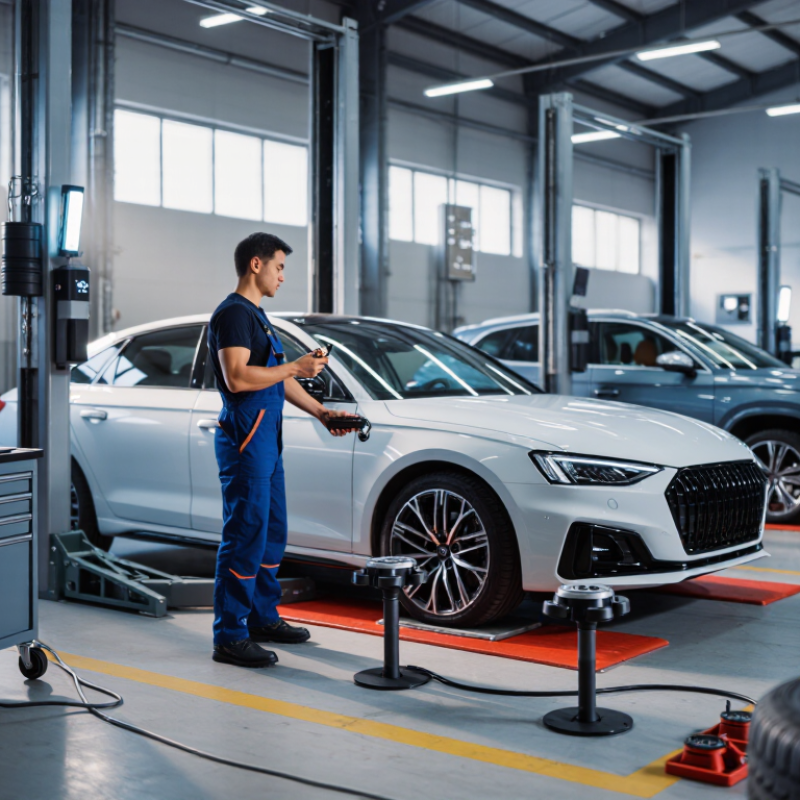
How to Choose Wheel Alignment Equipment in 2026?
Define Your Wheel Alignment Needs and Workshop Requirements
Start by studying your actual service mix. Record the vehicles entering your workshop each week. Include passenger cars, vans, electric vehicles, and light commercial models. Different wheel sizes and suspension designs may require different measurement ranges. Check your current lift, bay length, floor level, and lighting. A precise system cannot correct a poorly prepared workspace.
Measure your workflow, not your ambition. A busy workshop may need fast setup, automatic compensation, and clear inspection reports. A smaller garage may value simple operation and lower maintenance costs. Confirm that the equipment supports your lift type and wheel dimensions. Ask how often calibration is required. Also check whether technicians can complete routine checks without waiting for outside support.
Hands-on testing matters.
Place a vehicle on the lift and observe the full process. Watch for awkward clamps, cable restrictions, or confusing software prompts. Small delays become expensive during a crowded afternoon. Request evidence of measurement repeatability, calibration procedures, and technician training. Reliable data should remain consistent after several checks.
Do not trust impressive screens alone. That assumption can be costly. Some workshops overlook storage and charging space for wireless components. I have found that this mistake often appears after installation, not before. Record your requirements honestly, including weaknesses in your current process. Then compare equipment against those facts, rather than against attractive specifications.
