
Skip to content

Why Choose a Reliable Food Packaging Machine Manufacturer?

A packaging line is judged in real production, not during a polished factory demonstration. Film should feed evenly. Seals should hold. Product counts should stay consistent through a long shift. When these details fail, operators face waste, delays, and difficult decisions. A reliable Food Packaging Machine Manufacturer helps prevent such problems through careful design, documented testing, and responsive technical support.

For this introduction, packaging specialist Maya Chen offers this illustrative expert observation: “A dependable machine is one your team can clean, adjust, and maintain without guesswork.” It is a practical standard, not a sourced quotation from a named industry publication. Buyers should examine more than speed claims. Ask how the machine handles your actual product, packaging material, and changeover routine. Review maintenance access, operator training, spare-parts availability, and the clarity of service instructions. Small details matter. A hard-to-reach sensor can cost more time than a modest speed difference saves. No manufacturer is perfect, and a confident sales presentation is not proof of reliability. Compare references, request a production trial, and note what remains uncertain. Choosing carefully can support steadier output, safer workflows, and fewer costly surprises.
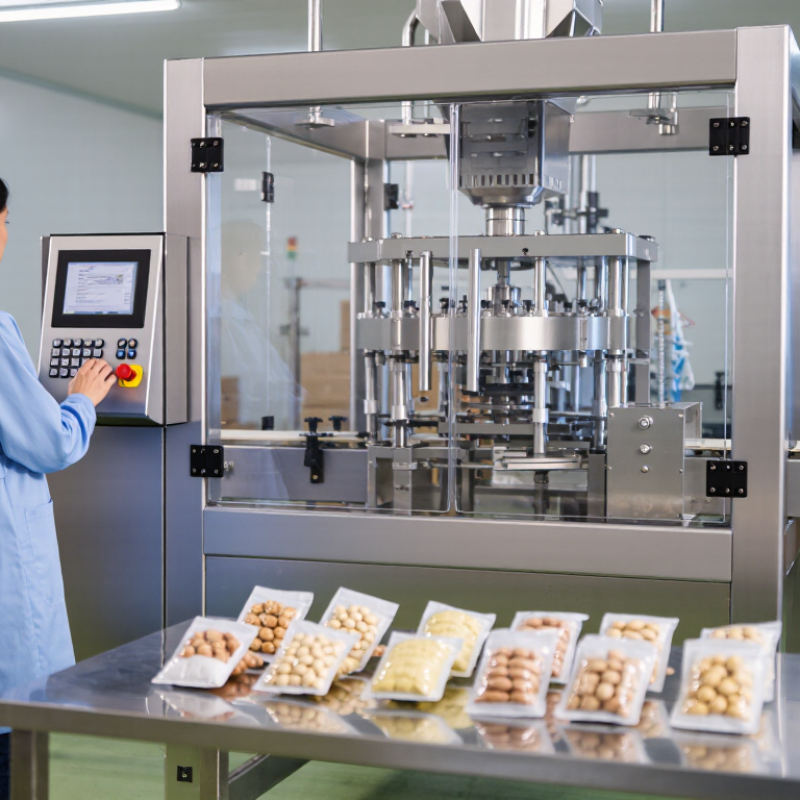
Why Choose a Reliable Food Packaging Machine Manufacturer?

What a Food Packaging Machine Manufacturer Provides

A reliable food packaging machine manufacturer provides more than equipment. It helps assess product texture, package format, target speed, and cleaning needs before selecting a filler, sealer, or checkweigher. Small details matter. The manufacturer can also plan product flow from filling through labeling, inspection, and case packing. PMMI’s 2023 State of the Industry report valued U.S. packaging machinery shipments at about $10.9 billion in 2022. That scale makes dependable integration important.

A qualified supplier should provide installation, operator training, changeover instructions, spare-parts planning, and troubleshooting support. Ask for trials using your actual product, film, and containers. These can expose leaks, crushed pieces, slow changeovers, or inconsistent seals before production begins. FAO’s 2019 report, The State of Food and Agriculture, estimated that 14% of food is lost between harvest and retail worldwide. Packaging is only one factor, but suitable equipment can help limit damage and sealing failures. No machine eliminates food loss. Request clear service intervals and acceptance criteria, then record results on the line. A supplier should explain maintenance limits, not only advertised output.

Why Choose a Reliable Food Packaging Machine Manufacturer? - What a Food Packaging Machine Manufacturer Provides

Area of Support What the Manufacturer Provides Why It Matters
Application assessment Review of product type, package format, target output, and production environment. Helps match the machine configuration to the actual packaging task.
Machine configuration Selection of suitable filling, weighing, sealing, labeling, or conveying equipment. Supports a practical production line layout and reduces avoidable equipment mismatches.
Packaging material compatibility Checks or trials with relevant films, trays, pouches, bottles, or other specified packaging materials. Confirms that the chosen machine can handle the intended package and sealing process.
Food-contact and hygiene design Information on food-contact components, cleanability, and machine materials; specifications depend on the model and application. Helps buyers assess sanitation needs and verify applicable food-safety requirements.
Testing and acceptance Factory testing and, where agreed, trials using the customer’s product and packaging materials. Provides an opportunity to check operation and packaging results before shipment.
Installation and commissioning Installation guidance, setup support, and operational checks, according to the supply agreement. Helps bring the equipment into service with the required utilities and line connections.
Operator training Instruction on machine operation, changeovers, routine cleaning, and basic troubleshooting. Helps operators use the equipment correctly and follow established procedures.
Documentation and spare parts Operating and maintenance documentation, parts information, and guidance on recommended spares. Supports routine maintenance and helps the team identify replacement parts.
After-sales service Technical assistance, service options, and response arrangements defined by the manufacturer and contract. Clarifies how support is handled if maintenance or technical questions arise.
Capacity and future planning Guidance on rated capacity, product changeovers, and possible line expansion, based on application details. Makes it easier to compare equipment against current needs and planned production changes.

Scope, performance, materials, testing, and service terms vary by machine model, application, and purchase agreement. Confirm specifications with the manufacturer before ordering.

How to Assess a Manufacturer’s Reliability

Why Choose a Reliable Food Packaging Machine Manufacturer?

How to Assess a Manufacturer’s Reliability

A reliable manufacturer should support its claims with evidence, not polished brochures. Ask to see the machine running with packaging materials and products similar to yours. Watch how it handles start-up, changeovers, and minor stoppages. Paper claims are easy. Real tests reveal more.

Check whether the manufacturer provides clear specifications, maintenance schedules, and spare-parts information. Ask how quickly common components can be supplied, and who answers technical questions after installation. Speak with customers who operate similar equipment, if possible. Their feedback may reveal details a sales demonstration misses, such as cleaning time or recurring adjustments.

Inspect the build quality closely: open the access panels, examine wiring labels, and check whether product-contact areas are easy to clean. Request records of factory testing and operator training. A dependable supplier should explain performance limits as plainly as strengths. No machine is trouble-free, and a missed detail can still surface after installation. Compare what is promised with what is documented, then note any unanswered questions before making a decision.

How Machine Quality Affects Production and Product Safety

A reliable food packaging machine manufacturer affects more than speed. Stable sealing temperature helps each pouch close consistently, while accurate filling reduces spills and uneven portions. On a busy line, even a small temperature drift can create weak seals that admit moisture or air. Small defects matter. Ask how the machine monitors heat, pressure, and fill weight, and how operators can spot a fault before more packs are affected.

Machine quality also shapes cleaning and product safety. Smooth, accessible food-contact surfaces are easier to inspect, while clear changeover procedures help reduce residue between runs. Guards and well-placed controls can make routine operation safer. Request practical demonstrations: watch a complete production cycle, test a changeover, and review maintenance instructions. A polished showroom trial is useful, but it may not reveal every issue under real production conditions. No machine removes the need for trained operators and regular checks.

Tips: Check seal samples at set intervals, record temperature and weight readings, and keep a log of cleaning and maintenance. Ask what support is available when a part wears out. A checklist can still miss things; review it with the people running the line.

Why Choose a Reliable Food Packaging Machine Manufacturer?

How machine quality supports production and product safety

The FDA Food Code sets cold-holding at 5°C (41°F) or below and hot-holding at 57°C (135°F) or above for time/temperature control for safety (TCS) food. Reliable packaging equipment can support hygienic handling and consistent seals, but these benchmarks are not packaging-machine specifications; food businesses must validate their own safety controls.

Source: FDA Food Code 2022, §§ 3-501.16 and 3-501.14.

What to Check in Technical Support and Compliance

A reliable food packaging machine manufacturer should explain how support works after installation, not just promise quick service. Ask who answers urgent calls, which hours are covered, and how faults are diagnosed. A useful support plan may include remote troubleshooting, technician visits, operator training, and clear spare-parts lead times. Ask for a sample maintenance schedule. Small details matter, such as how to clean a sealing jaw without damaging its surface.

Check that manuals, wiring diagrams, and troubleshooting steps match the exact machine configuration. Request a factory acceptance test using your packaging material and product, where practical. Record seal quality, changeover time, and reject rates. These figures create a baseline for later service discussions. Still, tests cannot predict every production issue. Real lines are messier.

Compliance support deserves the same scrutiny. Ask for documents identifying food-contact materials, electrical components, guarding, and cleaning requirements. Confirm that certificates and declarations cover the supplied model and intended use; paperwork may have limits. Requirements can vary by market, so have your own qualified compliance staff review the documents. Do not rely on a verbal assurance. If a supplier cannot explain a document’s scope, that is worth discussing before purchase. A careful review takes time, and I would not skip it just to meet a launch date.

How to Compare Manufacturers for Long-Term Operations

When comparing food packaging machine manufacturers, look beyond quoted speed. Ask for verified output using your actual film, product, and pack size. Request changeover times, seal-failure rates, and cleaning procedures from a factory acceptance test. Then compare warranty terms, remote-support hours, technician response times, and spare-parts lead times. Put these commitments in writing. A polished demonstration is useful, but it is not a production shift.

Check the evidence behind each claim. FAO’s 2023 Food Loss Index estimates that 13.2% of food was lost between harvest and retail from 2016 to 2022. UNEP’s Food Waste Index Report 2024 estimates 1.05 billion tonnes of food waste in 2022, including inedible parts. These figures cover different stages and do not prove that packaging machinery alone prevents waste. Still, they make dependable sealing and accurate date coding practical comparison points. Ask manufacturers for test records, not just target specifications. Visit a site running similar products, if possible, and speak with maintenance staff. Small details matter: how quickly an operator clears a jam, or whether a common sensor is stocked locally. No scorecard captures every awkward shift. Leave room to reassess your own assumptions.

Call free on
0800 1954 538