
Carton packaging is changing quickly. Smithers’ report, The Future of Global Packaging to 2028, forecasts that the global packaging market will reach approximately $1.2 trillion by 2028. That scale creates real pressure on converters: a Carton Printing Machine must deliver consistent color, clean registration, dependable uptime, and a sensible cost per box. Buyers also need to match equipment to board grade, print volume, available floor space, and finishing requirements. A sharp sample matters. So does the shift schedule behind it.
This guide compares ten common types of carton printing machines, from flexographic and offset presses to digital systems and integrated production lines. It focuses on practical trade-offs: setup time, run length, print quality, substrate flexibility, and operator skill. As a technical reference, FEFCO’s European Database for Corrugated Board Life Cycle Studies provides industry-specific data on corrugated packaging and production impacts. It helps put equipment decisions into a broader manufacturing context.
One point needs care: selecting a press from a specification sheet alone can mislead. A fast machine may not suit short, frequently changing jobs. And a low purchase price may hide higher setup costs. Because no verifiable, attributable expert quotation was provided for this topic, this introduction does not invent one. Instead, the comparisons ahead emphasize measurable criteria and questions buyers can test during supplier demonstrations. The best choice is the one that fits the carton, the production team, and the work actually booked.
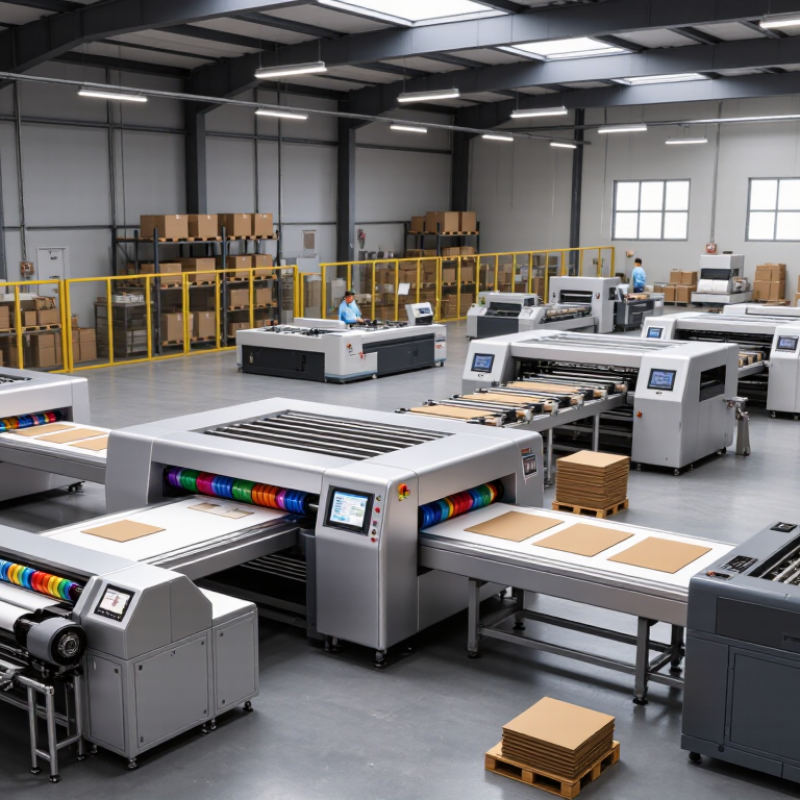
Carton printing machines convert flat paperboard into clear, branded packaging through controlled feeding, printing, drying, and delivery. Their core function is accurate ink transfer on a moving sheet or web. Feeding rollers separate cartons and maintain steady pressure. Registration sensors align each color with the previous image. Small alignment errors can blur text or shift graphics.
Different machines use different operating principles. Flexographic units transfer ink from an engraved anilox roller to a flexible plate, then onto the carton surface. Offset systems move ink through a plate and blanket cylinder before impression. Digital machines apply ink directly through electronically controlled printheads. After printing, hot air, infrared energy, or ultraviolet curing helps stabilize the image. Operators must balance ink viscosity, roller pressure, speed, and board moisture. One setting rarely suits every carton.
Tips: Check board flatness before production. Clean rollers and sensors regularly. Run a short test batch first. Experienced teams still make mistakes, especially during rapid changeovers. A practical checklist can prevent costly waste, though it cannot replace careful observation. Watch the first printed sheets closely. Their edges often reveal feeding problems before the machine alarm does.
Carton printing machines are best classified by ink process, substrate, press format, and finishing connection. The main groups include sheet-fed offset, web offset, flexographic, gravure, screen, digital inkjet, digital toner, hybrid, inline printer-slotter, and rotary converting systems. These categories overlap. A neat list can mislead.
Sheet-fed offset suits coated folding carton boards and detailed images. Flexography handles corrugated sheets, kraft liners, and fast inline production.
Gravure supports long runs where stable color justifies higher cylinder preparation costs. Digital inkjet and toner systems reduce setup waste for short runs, variable artwork, and frequent version changes.
Hybrid presses combine conventional color stations with digital data control. Inline printer-slotters connect printing, creasing, slotting, and folding in one workflow.
Smithers’ The Future of Global Printing to 2028 identifies packaging as a major source of print-market resilience. Its 2023–2028 forecast places global print value growth near 0.6% annually, while packaging applications remain stronger than many commercial segments. FEFCO’s European database reported roughly 54 billion square meters of corrugated production in 2023. That scale explains the demand for high-throughput flexographic equipment.
Yet machine choice is rarely simple. Moisture, board caliper, ink migration requirements, drying space, and operator skill can change the decision. Buyers should compare usable output, not impressive rated speed. Mistakes happen there.
Ten Main Types of Carton Printing Machines
Carton converters commonly select from ten machine types. Sheet-fed offset machines produce sharp images on coated board. Web offset systems suit long runs with continuous paper feeding. Flexographic machines print quickly on corrugated liners and folding carton stock. Gravure machines deliver rich, consistent color for very large orders. Digital inkjet machines support short runs, variable graphics, and fast changeovers.
Toner-based digital presses handle small batches with limited setup waste. Screen printing adds dense ink layers, tactile effects, and strong coverage on dark substrates. UV flatbed machines print directly onto rigid sheets, including unusual carton materials. Hybrid machines combine flexographic units with digital or inkjet modules. Rotary letterpress machines remain useful for simple designs and firm impression control. Each type behaves differently under production pressure. Moisture, board thickness, ink drying, and registration can change the result.
During equipment evaluations, converters should test real carton board, not only supplier samples. Check color consistency beside the folding and gluing line. A perfect sample can mislead. Digital systems may cost more per sheet, while gravure requires expensive cylinder preparation. Flexographic output can vary when anilox cells, plates, or pressure settings are poorly maintained. No machine wins every job. Experienced buyers compare running speed, waste, operator skill, maintenance access, and expected order size. My own preference would change after reviewing actual production data, because the cheapest purchase is not always the most reliable choice.
Choosing among the top 10 types of carton printing machines requires more than comparing purchase prices. The carton material sets the practical limit. Corrugated board suits flexographic machines, while coated folding cartons often need offset, digital, or gravure printing. Kraft surfaces absorb ink quickly. Coated stock shows sharper images, but it can expose scratches and registration errors.
Flexographic machines offer high production capacity and reliable coverage on corrugated sheets. They work well for shipping cartons and repeated designs. Offset machines deliver finer text, smoother gradients, and stronger color control. Their setup takes longer, especially for short runs. Digital inkjet and toner machines reduce setup waste and support variable artwork. They are useful for samples, seasonal packaging, and smaller batches. Screen printing creates heavy ink layers, while gravure supports consistent detail during very large runs. Hybrid machines combine processes, but maintenance becomes more demanding.
Print quality also depends on plate accuracy, drying performance, ink selection, and operator control. A machine rated for 15,000 sheets per hour may slow down with dense coverage or delicate board. Capacity figures need real production tests. Ask for samples using your actual carton material, artwork, and ink coverage. Watch the first and last sheets. Small color shifts can appear during long runs. I have seen buyers focus on speed and regret ignoring waste removal, drying space, and changeover time. No machine wins every comparison. A modest digital system may outperform a faster press when orders change daily.
Typical production capacity ranges, alongside the materials and print quality each machine type is commonly suited to.
Note: Capacity figures are indicative commercial ranges, not guaranteed machine specifications. Sheet-fed output is counted in sheets per hour; web-press output is counted in repeats per hour. They are not directly equivalent and vary with format, substrate, colors, and job setup.
| Machine type | Common materials | Typical print quality |
|---|---|---|
| Sheetfed offset | Folding carton board, paperboard | High detail and smooth halftones |
| Flexo post-print corrugated | Corrugated board, kraft liner | Good for bold graphics and text |
| Flexo preprint web | Paper liners for corrugated board | Consistent graphics across long runs |
| Rotary flexo carton press | Coated paperboard, kraft paper | Good color coverage and registration |
| Single-pass digital inkjet | Coated or treated paperboard and liner | High-resolution variable graphics |
| Sheetfed digital | Folding carton board, paperboard | Sharp detail; suited to short runs |
| Gravure web press | Paper and compatible coated substrates | Excellent tonal consistency on long runs |
| Flatbed screen printing | Paperboard and corrugated board | Opaque, thick ink deposits; lower fine-detail speed |
| Litho-laminated corrugated line | Printed paper sheets laminated to corrugated board | High-quality graphics on a rigid pack |
| Hybrid flexo-digital web press | Paperboard, paper liners, compatible coated webs | Flexible mix of process color and variable data |
Top 10 Types of Carton Printing Machines for Global Buyers
How Global Buyers Choose the Right Carton Printing Machine
Global buyers should begin with the carton, not the machine brochure. Folding cartons may require offset, flexographic, digital, gravure, or hybrid printing. Check board thickness, coating, sheet size, color demands, and monthly volume. Smithers’ market research identifies packaging production efficiency and shorter runs as major investment drivers. That makes quick makeready valuable for frequent artwork changes. But high speed alone can mislead.
A practical evaluation should measure usable output, not rated speed. Ask for registration samples using your actual board. Inspect ink coverage, drying, waste, and feeder stability. PMMI reported that U.S. packaging machinery shipments exceeded 10 billion dollars in 2023, reflecting continued automation investment. Buyers should compare automatic plate changing, inspection cameras, curing systems, and remote diagnostics. These features may reduce labor, although they also increase training needs.
Total cost deserves uncomfortable attention. Include energy consumption, spare parts, software updates, cleaning time, and operator availability. FEFCO industry statistics show the substantial scale of European corrugated production, so service response can affect production continuity. A machine with lower purchase cost may create higher downtime later. I have seen specifications hide setup losses. They should not. Request a documented acceptance test, maintenance schedule, and local technical support before signing. Forecast growth carefully, but leave room for human error.
| Machine Type | Typical Printing Method | Best-Suited Carton or Job | Key Advantages | Points to Evaluate |
|---|---|---|---|---|
| Flexographic Folder-Gluer | Flexographic printing with in-line slotting, folding, and gluing | Corrugated shipping boxes and regular production runs | Combines several converting steps; suitable for high-volume production | Check board range, print color capacity, changeover time, and gluing accuracy |
| Flexographic Printer-Slotter | Flexographic printing followed by slotting and die cutting | Corrugated cases with logos, text, and basic graphics | Efficient for repeat jobs and widely used in corrugated converting | Compare registration control, feeding system, usable sheet size, and setup requirements |
| Preprint Flexographic Press | Prints a paper roll before it is laminated to corrugated board | Large-volume packaging requiring consistent, high-quality graphics | Can deliver consistent print quality across long production runs | Requires compatible paper handling and a downstream laminating process |
| Offset Sheetfed Press | Offset lithography on cartonboard or coated sheets | Folding cartons, retail packaging, and detailed multicolor artwork | Fine image detail and smooth tonal reproduction | Review sheet format, substrate limits, make-ready time, and finishing compatibility |
| Offset-Laminator Line | Printed liner sheets are laminated onto corrugated board | Corrugated packaging that needs premium graphics and added rigidity | Combines high-quality printed surfaces with corrugated strength | Check alignment, adhesive system, drying requirements, and line speed balance |
| Digital Inkjet Carton Printer | Direct-to-board inkjet printing | Short runs, prototypes, customized packaging, and frequent design changes | Supports variable graphics and avoids conventional printing plates | Verify board compatibility, ink requirements, output speed, and cost per job |
| Screen Printing Machine | Ink is transferred through a prepared screen onto the substrate | Special effects, opaque inks, and selected packaging applications | Can deposit relatively thick ink layers for distinctive visual effects | Consider setup time, screen preparation, production volume, and drying needs |
| Gravure Printing Press | Rotogravure using engraved printing cylinders | Very long runs where consistent image reproduction is important | Designed for sustained production and repeatable print quality | Evaluate cylinder costs, job length, substrate handling, and facility requirements |
| Flexographic Preprint Press | Flexographic printing on linerboard before corrugation | Corrugated packaging produced in substantial, repeat quantities | Prints the liner before it becomes part of the corrugated sheet | Assess liner grades, color consistency, roll logistics, and corrugator integration |
| Hybrid Digital-Flexographic Press | Digital printing combined with flexographic units or finishing | Packaging programs mixing variable content with conventional production | Can combine digital job flexibility with selected in-line processes | Confirm workflow compatibility, usable materials, service support, and total operating cost |
Buyer selection checklist: Match the machine to carton material, sheet or roll format, required print quality, average job length, production speed, finishing steps, operator skills, maintenance support, and local electrical and safety requirements. Capabilities vary by machine configuration and manufacturer.