
What Is a Refrigerated Sea Container?
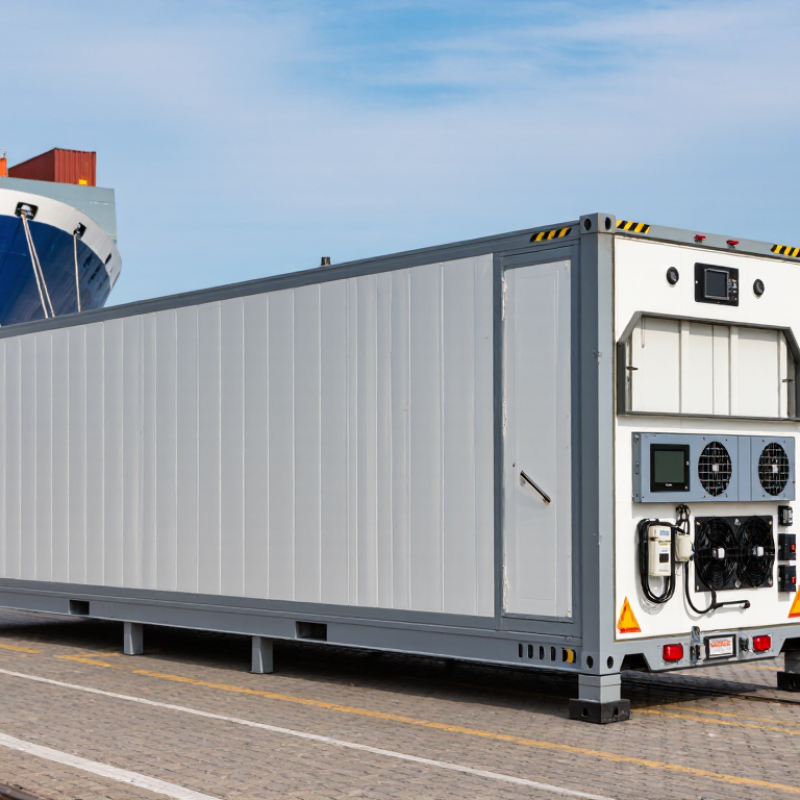
A refrigerated sea container is an insulated, powered container designed to protect temperature-sensitive cargo during ocean transport. It combines a sealed cargo space, refrigeration machinery, airflow controls, and monitoring technology. The unit does not actively cool warm cargo quickly. It mainly maintains the correct temperature after proper pre-cooling.
That distinction matters. Drewry’s Reefer Shipping Annual Review and Forecast 2024 reported continued growth in perishable seaborne trade, despite uneven agricultural markets and shipping disruptions. The Food and Agriculture Organization also estimates that 14% of food is lost between harvest and wholesale. Reliable temperature control can reduce part of that loss, but it cannot correct poor loading, delayed plugs, or damaged packaging. Small details matter. Air must circulate beneath the cargo. Doors should remain closed. A data logger should record conditions continuously.
Peter Gross, a long-time Thermo King refrigeration specialist, describes the equipment simply: “A reefer is a mobile cold room.” The comparison is useful, although incomplete. A refrigerated sea container also depends on vessel power, terminal handling, inspection procedures, and trained operators. Its set point may be −18°C for frozen products or near 0°C for selected fresh cargo. The correct setting depends on the commodity, not guesswork.
This article will explain the container’s components, operating cycle, monitoring methods, and practical limitations. It will also question a common assumption: colder is not always safer. Product specifications, ventilation needs, humidity, and transit duration must guide every decision. A reefer protects quality only when the entire cold chain works together.
What Is a Refrigerated Sea Container?
What Is a Refrigerated Sea Container?
A refrigerated sea container, often called a reefer, is an insulated steel box with an integrated cooling unit. It transports temperature-sensitive cargo by ship, truck, and rail. Fresh fruit, seafood, dairy products, medicines, and frozen foods may require this equipment. Typical settings range from chilled temperatures above 0°C to around -18°C or lower. The correct setting depends on the product, packaging, and voyage duration.
Temperature control is more than choosing a number. A setpoint is not the cargo temperature. Before loading, operators should inspect the unit, confirm airflow, and record the product’s core temperature. Vents also matter. Fresh produce may need ventilation to manage respiration, while frozen cargo requires stable, uninterrupted cooling. Power interruptions can cause hidden damage, even when the container exterior looks normal. This is where practical experience matters.
The Food and Agriculture Organization reported that 14% of food is lost between harvest and wholesale. The United Nations Environment Programme later estimated that 19% of food available to consumers was wasted in 2022. Refrigerated containers cannot solve every cold-chain failure, but they reduce exposure to heat when correctly selected and monitored. Data loggers, alarm records, and inspection photos improve accountability. Still, reefer operations are not perfect. A crowded loading pattern can block airflow. Small mistakes become expensive at sea.
What Is a Refrigerated Sea Container?
| Data Dimension | Typical Data | Practical Description |
|---|---|---|
| Primary Function | Temperature-controlled ocean transport | A refrigerated sea container, commonly called a reefer container, keeps temperature-sensitive cargo within a controlled range during transport and temporary storage. |
| Common Container Lengths | 20 ft and 40 ft | These are the standard lengths used for international shipping. A 40 ft high-cube reefer provides additional internal height compared with a standard 40 ft unit. |
| External Width | Approximately 2.44 m | The standard external width allows the container to fit common intermodal transport equipment and vessel cell guides. |
| External Height | Approximately 2.59 m standard; about 2.90 m high-cube | Actual dimensions can vary slightly according to container design, corner fittings, and applicable dimensional standards. |
| Typical Internal Length | About 5.4 m for a 20 ft reefer; about 11.6 m for a 40 ft high-cube reefer | Internal length is shorter than the nominal container length because space is reserved for the refrigeration machinery and airflow system. |
| Typical Internal Width | About 2.29 m | The internal width is reduced by insulated wall panels and interior air-distribution components. |
| Typical Internal Height | About 2.26 m for a 20 ft reefer; about 2.55 m for a 40 ft high-cube reefer | Available height depends on the container type, insulation thickness, floor construction, and refrigeration equipment layout. |
| Approximate Internal Volume | Approximately 28 m³ for 20 ft; approximately 67 m³ for 40 ft high-cube | Usable cargo volume is lower than the geometric internal volume because cargo must not block the return-air path or supply-air outlets. |
| Typical Maximum Gross Weight | Approximately 30,480 kg for 20 ft; approximately 32,500–34,000 kg for 40 ft | The permitted gross weight depends on the container rating, road regulations, rail limits, vessel requirements, and the shipping route. |
| Typical Tare Weight | Approximately 2,900–3,400 kg for 20 ft; approximately 4,500–5,000 kg for 40 ft high-cube | Tare weight is the empty container weight, including insulation, flooring, doors, and the refrigeration unit. |
| Typical Payload Capacity | Approximately 27,000 kg for 20 ft; approximately 28,000–29,500 kg for 40 ft | Payload is calculated by subtracting tare weight from the permitted maximum gross weight. Operational limits may be lower. |
| Temperature Control Range | Typically about -30°C to +30°C | The exact range varies by refrigeration unit and operating mode. Some specialized equipment supports temperatures below -30°C. |
| Common Cargo Temperatures | Frozen goods: approximately -18°C to -25°C; chilled goods: approximately 0°C to +5°C; fresh produce: commonly +2°C to +13°C | The required set point must follow the cargo specification, regulatory requirements, and the temperature stated in the transport instructions. |
| Cooling Method | Mechanical refrigeration with forced-air circulation | A powered refrigeration unit removes heat from inside the container and circulates conditioned air around the cargo. |
| Power Supply | Commonly three-phase electrical power at 380–460 V and 50–60 Hz | Ships, terminals, depots, and trucks require compatible electrical connections or approved generator equipment. |
| Typical Operating Power | Approximately 6–15 kW while actively cooling | Power consumption changes with ambient temperature, cargo temperature, set point, insulation condition, and whether the unit is cooling or heating. |
| Airflow Requirement | Clear airflow beneath the cargo and along the container walls | Cargo should be loaded evenly and remain below the maximum load line. Blocked air channels can cause uneven temperatures and cargo damage. |
| Temperature Monitoring | Integrated controller with sensors and data recording | Modern reefers normally record supply-air and return-air temperatures, alarms, operating events, and set-point changes. |
| Insulation | Foam-insulated walls, roof, doors, and floor | The insulated structure reduces heat transfer between the cargo space and the outside environment, helping the refrigeration unit maintain the set point. |
| Typical Applications | Food, pharmaceuticals, chemicals, flowers, and other temperature-sensitive products | Reefers are used when cargo quality, safety, or shelf life depends on maintaining a specified temperature throughout the logistics process. |
| Key Operating Limitation | Designed mainly to maintain cargo temperature, not rapidly cool warm cargo | Products should generally be pre-cooled to the required transport temperature before loading unless the transport plan specifically allows otherwise. |
Note: Dimensions, weights, electrical requirements, temperature ranges, and power consumption are typical industry values. Exact specifications vary by container model, equipment configuration, cargo requirements, and applicable transport regulations.
Related Posts
-
10 Cold Storage Container Buying Tips for Global Buyers
-
2026 Top 40ft Shipping Container Types and Prices?
-
2025 Top Benefits of Using 20ft Refrigerated Containers for Your Business
-

Why Choose a 20ft Refrigerated Container for Your Business Needs?
-

What is a 20ft refrigerated container used for?
-
How to Choose the Right Cold Storage Container for Your Needs
