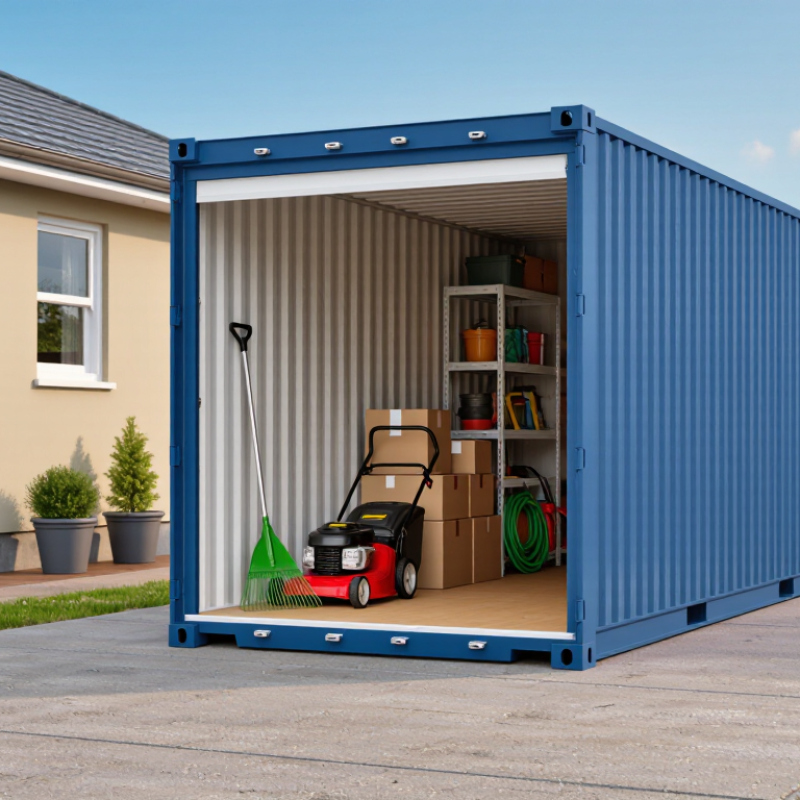
A 10ft storage container can look surprisingly roomy in a product photo. In a driveway or beside a workshop, its real footprint becomes easier to judge. The right choice depends on what you plan to store, how often you need access, and where the container will sit. A few boxes and garden tools need less usable space than a mower, shelving, or bulky seasonal equipment.
Measure the items, not just the room you hope to create. Note their length, width, and height, then allow space to walk in and reach what sits at the back. A tape measure and a simple floor plan can prevent an expensive mismatch. Check the container’s external and internal dimensions, since wall thickness, doors, and the floor can reduce usable space. Door opening size matters, too. Awkward? Sometimes. Still important.
This guide explains how to assess whether a 10ft storage container fits your needs, compare common storage uses, and review practical site requirements. Ground level, delivery access, and space for the doors to open can all affect placement. Specifications vary by manufacturer and model, so verify measurements before ordering. A compact unit may be ideal for one household and frustrating for another. That part is easy to underestimate. The aim is not to buy the biggest container available, but to choose a size that holds your belongings safely and remains convenient to use.
A 10-foot container with an 8-foot exterior width has a nominal footprint of 80 square feet. That figure is a useful starting point, not the clear floor area you can pack. ISO 668:2020, the international standard for freight-container dimensions, specifies a standard-series width of 2,438 mm, or about 8 feet. Interior walls, corner fittings, and door framing reduce usable space.
For a rough real-world estimate, a unit with interior dimensions near 9 feet 3 inches long by 7 feet 8 inches wide offers about 71 square feet of floor space. Check the actual unit’s measurements; designs vary. Measure before loading.
A sofa about 7 feet long may fit along one wall, while boxes stacked near the doorway can quickly narrow the path inside. Shelving also changes usable capacity, even when it saves floor space.
Think in both floor area and cubic volume: tall, stable items may use headroom, but heavy objects need a secure, level base. The 80-square-foot estimate can make a container seem roomier than it feels once loaded. That’s easy to overlook.
A 10ft container is named for its exterior length, not the clear space available inside. Wall panels, corner posts, and the door frame take up room. The usable length may be closer to nine feet, but dimensions vary by construction and model. Check the seller’s specification sheet rather than planning from the advertised size alone.
Measure the items you intend to store, including handles and awkward projections. Then compare them with the interior length, width, and height. The doorway matters too: a cabinet might fit inside once assembled, yet fail to pass through the opening. Measure the door’s clear width and height, not just the container’s interior. Leave a little room to turn bulky objects.
Small details count. Corrugated walls are not flat, and internal fittings can reduce clear space. Insulation or lining may take away more usable width and height. I’d sketch the footprint on a floor and mark the door swing before ordering; it is an easy step to skip. Also consider access space between stored items. A tightly packed container may hold more, but finding one box at the back can become a nuisance. Compare the exact internal and door-opening dimensions with your largest item, and allow a practical margin.
| Measurement or planning factor | Typical 10ft container size | What it means for your storage plan |
|---|---|---|
| Exterior length × width × height | About 10ft × 8ft × 8ft 6in (120 × 96 × 102in) |
Use these dimensions to check the space needed for delivery and placement. They do not describe the room available inside. |
| Interior length × width × height | Approximately 9ft 3in × 7ft 8in × 7ft 10in (111 × 92 × 94in) |
These are typical internal dimensions. Wall thickness, lining, flooring, and the specific container design can reduce usable space. |
| Interior floor area | About 70.8 sq ft (111in × 92in) |
Useful for estimating floor-level storage, but leave room for access and account for items that cannot be stacked. |
| Approximate interior volume | About 556 cu ft | Calculated from the typical interior dimensions above. Actual usable capacity may be lower because of the door, fittings, and packing gaps. |
| Approximate door opening | About 7ft 8in wide × 7ft 5in high (92 × 89in) |
Check the largest item’s height and width before ordering. A bulky item may fit inside but still be too large to pass through the doorway. |
| Allow for loading and access | Keep a clear path where practical | Boxes, furniture, and equipment may not pack tightly. Allow space to reach items stored at the back and avoid blocking the door. |
| Before buying or renting | Confirm the unit’s specification sheet | 10ft containers are not made to one universal specification. Verify the actual internal dimensions, door opening, and any interior lining with the supplier. |
Note: Dimensions are typical examples, not guaranteed specifications. Always measure your largest items and compare them with the exact container’s interior and door-opening dimensions before ordering.
A 10-foot container’s length tells you little about the height available inside. ISO 668 specifies common external heights of 8 ft 6 in and 9 ft 6 in. The taller option is often called high-cube. That extra foot can help accommodate upright shelving, tall tools, or stacked cartons. However, external height is not usable clearance. Roof structure, flooring, and door framing take up space. Details matter.
Before choosing, measure your tallest item and compare it with the stated internal height and door-opening height. A cabinet might fit inside but still fail to pass through the doors. Leave room for lifting and handling, too; a tight fit on paper can become awkward in practice. A common planning mistake is relying on nominal dimensions alone. Check the supplier’s specification sheet for the exact unit, since construction details can vary. Measure twice. If your load is close to either limit, test the access path and loading method before arranging delivery.
Choose a height: ISO 668 defines common container heights of 8 ft 6 in (102 in / 2.59 m) and 9 ft 6 in (114 in / 2.90 m). The taller option provides 12 in (305 mm) more exterior height. Check the container’s interior dimensions too, as usable clearance is reduced by the floor and roof structure.
When choosing a 10ft storage container, check the clear door opening, not just the container’s exterior size. Measure the opening at its narrowest point and lowest height, including any frame or raised threshold. Door dimensions can vary, so confirm the usable measurements with the supplier before arranging delivery.
Measure each large item at its widest and tallest points. A sofa may fit through when tilted, while a rigid cabinet might not. Check the full turning space needed to approach and enter the container, too. That gap matters. A cardboard outline can help you test awkward shapes in a hallway or driveway before moving day. Leave room for your hands, a dolly, or protective padding; an item that barely clears on paper may catch during handling. I once overlooked the turning angle, and the straight-line measurement was not enough. Recheck the route, not only the doorway.
A 10ft storage container can look spacious in a product photo, but usable capacity depends on its model and construction. Before ordering, ask the supplier for the container’s tare weight, maximum gross weight, and rated payload. The payload is the weight of your stored goods, not the container itself. Check that it can handle your heaviest items, including pallets or equipment. Weight adds up quickly. If the supplier gives only a general figure, request the specification for the exact unit being delivered. I once underestimated how much boxed stock weighed. It was an easy mistake.
Tips: Measure the narrowest gate, driveway, and turning area. Ask the supplier what delivery vehicle and unloading method they plan to use. Confirm required overhead clearance, including for trees and cables, and check whether the ground is firm and level. A loaded delivery truck may need more room than you expect. Send photos and measurements to the supplier before purchase; a quick site check can prevent a costly delivery delay.
Also confirm the container’s external and internal dimensions. Wall thickness and door framing reduce usable space, so a bulky item may not fit through the opening even when the interior seems large enough. Measure the item and its route inside. I would double-check the figures in writing, since access assumptions can be wrong.