Skip to content

2026 Top 30 Foot Shipping Container Prices?

A 30 foot shipping container can solve a practical space problem without requiring a full-length unit. It may fit a compact worksite, a small inventory area, or a property with limited access. But the advertised price is only the starting point. Condition, location, delivery distance, and modifications can change the final cost considerably.

This 2026 guide examines the factors behind 30-foot container prices and explains what buyers should compare before requesting a quote. A clean, wind- and watertight unit may cost more than one showing dents, worn flooring, or surface rust. Delivery also matters. A container that looks affordable online may become less attractive after transport, unloading, and site preparation are included. Small details add up.

Price listings are not always directly comparable. Some include delivery; others cover the container alone. Availability can also vary by region and season, so treat any published figure as a guide rather than a guaranteed offer. Ask for the unit’s condition, dimensions, included services, and delivery terms in writing. Then compare like with like.

A named expert quotation would add useful context, but no source or verifiable expert statement was provided for this request. To protect accuracy, this introduction does not invent an expert’s name or words. That limitation matters. Before publishing, confirm any quotation directly with its speaker and cite a reliable source. A careful estimate is more useful than a confident number without context.
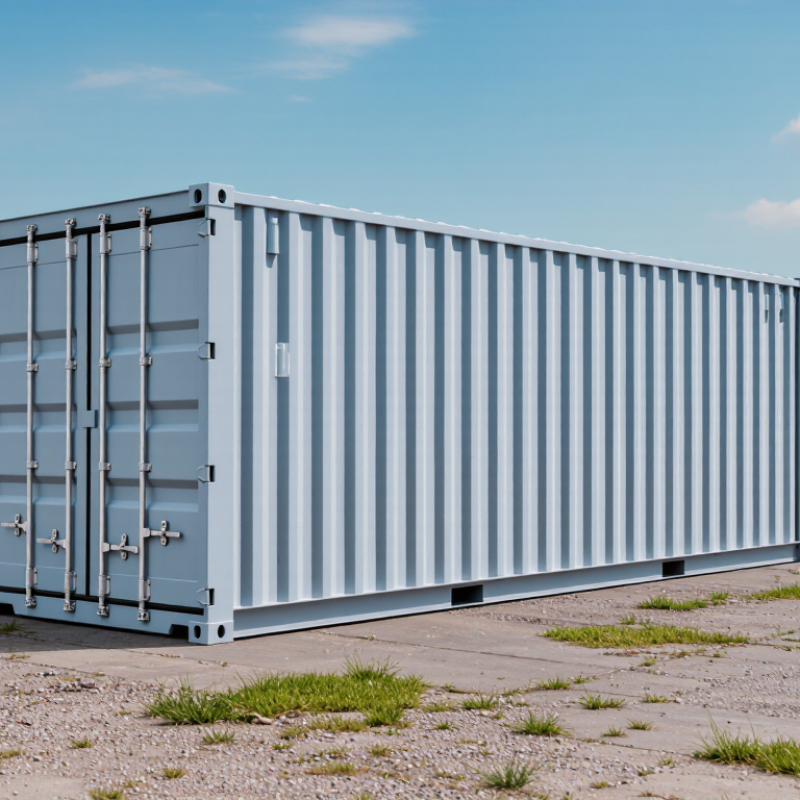
2026 Top 30 Foot Shipping Container Prices?

Define the 30-Foot Container: ISO 668 Size Code 1B and Dimensions

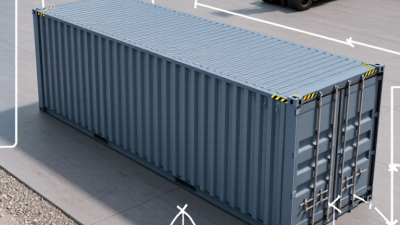
A 30-foot shipping container is commonly identified by ISO 668 size code 1B. Its nominal external length is 9,125 millimetres, or about 29 feet 11 inches. The standard external width is 2,438 millimetres, with a height of 2,591 millimetres. That equals roughly 8 feet wide and 8 feet 6 inches high.

The interior space is smaller. A typical unit measures about 8,830 millimetres long, 2,350 millimetres wide, and 2,390 millimetres high. Exact measurements can change with wall thickness, floor construction, and door design. Measure the actual unit. Online listings sometimes round “30-foot” too freely.

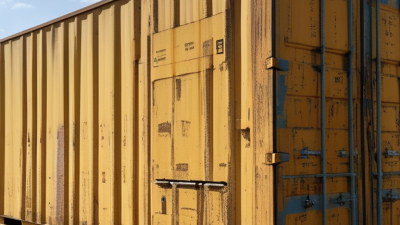
For 2026 pricing, condition matters more than the label. A weather-tight used 1B container may cost less than a newer unit with clean flooring and sound corner fittings. Delivery distance, local inventory, lifting equipment, and taxes also affect the final quote. Inspect the roof for patches, the doors for square alignment, and the floor for soft areas. Check the identification plate when available. It can confirm dimensions, maximum gross mass, and inspection details. A careful buyer should question unusually cheap offers. The advertised price may exclude transport. One detail is easy to miss: a 30-foot container is less common than 20- and 40-foot units, so availability can shift prices quickly.

Compare 2026 Prices by New, Used, and Cargo-Worthy Condition

2026 Top 30 Foot Shipping Container Prices?

For 2026, a new 20-foot shipping container may cost about $3,000 to $5,500 in the United States. These units usually have clean floors, sealed doors, and minimal surface rust. A used container often sells for $1,500 to $3,000. Its history matters. Previous trips may leave dents, patched panels, or worn door gaskets.

Cargo-worthy containers usually cost $2,000 to $4,000. They are used, but still suitable for international transport under current inspection standards. Check the locking bars, roof seams, corner posts, and floor strength before paying. A dark interior smell can reveal moisture problems. Small rust spots are manageable. Soft steel is not.

Prices change sharply by location. Delivery may add $500 to $2,000, especially when a crane truck is required. Local taxes, port fees, and modifications can raise the final bill. My early estimates often focused only on the container price. That was incomplete. A cheaper unit can become expensive after transport and repairs.

Ask for recent photos and the identification plate. Confirm the external dimensions, internal height, and door opening. Some sellers describe heavily repaired units as cargo-worthy, so independent inspection remains valuable. The lowest quote is not always the safest purchase. Expect differences between regions, seasons, and available inventory.

2026 Top 30 Foot Shipping Container Prices? – Compare 2026 Prices by New, Used, and Cargo-Worthy Condition

Indicative U.S. price ranges for 30-foot shipping containers and common configurations. Prices are shown in USD and are estimates for comparison, not guaranteed quotes.

Condition Container Type Typical Specifications Estimated Price (USD) Pricing Notes
New or One-Trip — typically the highest condition and price; verify whether the unit is genuinely new or has made one cargo trip.
New / one-trip Standard enclosed unit Approx. 30 ft × 8 ft × 8 ft 6 in $7,000–$10,500 New 30-foot units are uncommon; confirm actual age, dimensions, and availability.
New / one-trip High-cube enclosed unit Approx. 30 ft × 8 ft × 9 ft 6 in $8,000–$12,000 Extra height may increase the purchase price and delivery requirements.
New / one-trip Insulated unit 30 ft; insulated walls and roof $9,000–$14,000 Insulation type and interior finish can substantially affect cost.
New / one-trip Refrigerated unit 30 ft; powered refrigeration equipment $18,000–$35,000 Price depends on refrigeration machinery, operating hours, and service history.
New / one-trip Side-access unit 30 ft; additional side-opening doors $10,000–$16,000 Side doors may be a factory option or a later modification.
New / one-trip Double-door unit 30 ft; doors at both ends $8,500–$13,000 Check door seals, locking bars, and whether both ends open fully.
New / one-trip Open-side unit 30 ft; full-length side access $12,000–$20,000 Specialized construction; availability is limited and specifications vary.
New / one-trip Open-top unit 30 ft; removable roof cover or open top $9,000–$15,000 Confirm whether the cover, bows, and other fittings are included.
New / one-trip Ventilated unit 30 ft; passive ventilation openings $8,000–$12,500 Vent placement and quantity differ by design.
New / one-trip Custom-finished storage unit 30 ft; basic lining, lighting, or access upgrades $10,000–$18,000 Custom work is not standardized; compare a written specification.
Used — condition, repair history, age, and local supply can create wide differences between units.
Used Standard enclosed unit Approx. 30 ft × 8 ft × 8 ft 6 in $4,500–$7,500 Inspect floors, roof, corner posts, doors, and signs of water entry.
Used High-cube enclosed unit Approx. 30 ft × 8 ft × 9 ft 6 in $5,000–$8,500 Confirm overall height and transport clearance before purchase.
Used Insulated unit 30 ft; insulated walls and roof $5,500–$9,500 Ask whether insulation is intact and whether condensation or odor is present.
Used Refrigerated unit 30 ft; refrigeration equipment included $8,000–$20,000 Non-operational units may cost less; request an equipment test and service records.
Used Side-access unit 30 ft; additional side-opening doors $6,500–$11,000 Check door alignment, hinges, seals, and modifications to the side wall.
Used Double-door unit 30 ft; doors at both ends $5,500–$9,000 Both sets of doors should be inspected for operation and weather tightness.
Used Open-side unit 30 ft; full-length side access $7,500–$13,000 Structural condition and door hardware have a strong effect on value.
Used Open-top unit 30 ft; removable roof cover or open top $5,500–$9,500 Inspect roof fittings and check whether a tarp or cover is included.
Used Ventilated unit 30 ft; passive ventilation openings $5,000–$8,500 Review vent condition and the unit’s suitability for the intended cargo or storage.
Used Custom-finished storage unit 30 ft; existing lining, lighting, or access upgrades $6,000–$12,000 Value depends on the quality and condition of the existing modifications.
Cargo-worthy — assessed as suitable for cargo use, subject to inspection and the applicable shipping requirements.
Cargo-worthy Standard enclosed unit Approx. 30 ft × 8 ft × 8 ft 6 in $5,000–$8,000 Request the inspection details and confirm acceptance for the intended route.
Cargo-worthy High-cube enclosed unit Approx. 30 ft × 8 ft × 9 ft 6 in $5,500–$9,000 Availability is limited; check height, payload, and transport restrictions.
Cargo-worthy Insulated unit 30 ft; insulated walls and roof $6,000–$10,000 Cargo-worthy status does not by itself certify insulation performance.
Cargo-worthy Refrigerated unit 30 ft; cargo-worthy shell with refrigeration equipment $10,000–$24,000 Confirm both the container condition and the refrigeration unit’s operating status.
Cargo-worthy Side-access unit 30 ft; additional side-opening doors $7,000–$11,500 Check that modifications have not compromised door function or structural integrity.
Cargo-worthy Double-door unit 30 ft; doors at both ends $6,000–$9,500 Verify the condition and weather seals of both door sets.
Cargo-worthy Open-side unit 30 ft; full-length side access $8,000–$14,000 Confirm the inspection covers the side-opening structure and hardware.
Cargo-worthy Open-top unit 30 ft; removable roof cover or open top $6,000–$10,000 Check roof fittings and confirm which covers or accessories are supplied.
Cargo-worthy Ventilated unit 30 ft; passive ventilation openings $5,500–$9,000 Inspect the shell and vents; cargo suitability depends on the intended use.
Cargo-worthy Custom-finished storage unit 30 ft; cargo-worthy shell with basic upgrades $6,500–$12,500 Ask for separate pricing for the container, inspection, and modifications.

Important: Thirty-foot containers are less standardized and less widely available than common 20-foot and 40-foot units; dimensions and construction can vary. These broad 2026 planning estimates exclude delivery, unloading, taxes, permits, and site preparation. Ask for the exact external and internal dimensions, condition report, cargo-use documentation, and a delivered quote before buying.

Benchmark Supplier Quotes by Container Type, Region, and USD Price

2026 Top 30 Foot Shipping Container Prices?

Supplier quotes for 30-foot containers vary sharply by type and region. A new standard dry container commonly benchmarks at USD 4,200–6,800 in North America. European quotes often fall between USD 4,000 and 6,500. East Asian supply can reach USD 3,700–5,900 before inland delivery.

Used units cost less. Expect USD 2,000–4,000 for wind-and-water-tight equipment in major North American markets. European used prices usually range from USD 2,200–4,300. In Southeast Asia, similar units may quote at USD 1,700–3,600. High-cube equipment adds roughly USD 400–900. Refrigerated units are much higher, often USD 18,000–32,000 used and USD 45,000–70,000 new.

These benchmarks reflect supplier quote patterns, container equipment reports, and regional availability data. The UNCTAD Review of Maritime Transport 2024 recorded strong fleet expansion, which may soften prices where stock is plentiful. Not everywhere. Port congestion, repositioning costs, steel prices, and inspection standards can quickly change the final figure.

Ask for a delivered quote.

A low headline price can exclude chassis fees, lift charges, tax, repainting, or door repairs. Buyers should verify manufacture year, CSC plate validity, floor condition, and cargo-door seals. Quotes older than two weeks may already be unreliable. That weakness matters when comparing regions. Prices are benchmarks, not promises.

Add Freight, Drayage, Taxes, and Crane Fees to the Delivered Cost

2026 Top 30 Foot Shipping Container Prices?

A 30-foot shipping container may cost about $3,000 to $7,500 in 2026. Used units usually cost less, but condition changes the price quickly. Check the floor, door seals, corner posts, and roof for damage. A container with fresh paint can still hide rust underneath. I have seen buyers focus on the unit price and miss the delivery bill.

Freight often adds $800 to $3,000, depending on distance, route, and seasonal demand. Drayage charges cover local transport from the terminal to your site. They may include fuel, waiting time, permits, and difficult access fees. A narrow driveway can create problems. Measure the entrance, turning area, and unloading space before ordering. Small errors become expensive delays.

Taxes may apply to the purchase or import value. Rates depend on location and local classification. Ask for a written breakdown before payment. Crane fees can add $500 to $2,000 when the truck cannot unload directly. Ground preparation may require gravel, concrete blocks, or leveling work. These costs are easy to overlook. A realistic delivered estimate may reach $5,000 to $13,000, sometimes more. That range is only a planning guide, not a guaranteed quote. Prices change with availability, weather, and port congestion. My own estimates have been wrong when access conditions were unclear. Take site photos and request an itemized quote.

Verify the CSC Plate and ISO 1496 Safety and Payload Specifications

2026 Top 30 Foot Shipping Container Prices?

A 2026 price quote means little without a verified CSC plate. I would inspect the plate before comparing suppliers, because repairs and transport can quickly change the final cost. The plate should be readable, securely fixed, and matched to the container number. Check the maximum gross mass, tare mass, and permitted payload. The payload equals gross mass minus tare mass. That figure is not the cargo allowance.

ISO 1496-1 provides important requirements for general-purpose freight containers. It covers dimensions, lifting points, floor strength, wall strength, and testing conditions. A compliant container should also have sound corner castings, locking bars, and a dry, level floor. Look closely at weld repairs and heavy corrosion. Small defects can hide larger structural problems. Do not rely on photographs alone.

A 30-foot unit may be less common than standard lengths, so its price can include special manufacturing, delivery, or modification costs. Ask for the CSC plate details, inspection status, tare weight, maximum gross mass, and recent photographs. Compare those facts with the seller’s written specification. My own mistake would be focusing on the lowest advertised price first. A cheaper container can become expensive after inspection, transport, repainting, and floor repairs. The plate must support the sale, not merely decorate it.

Call free on
0800 1954 538