Skip to content

What Is a 10ft Storage Container and What Is It Used For?

A 10ft storage container offers a practical answer when a full-size unit feels excessive. Typically measuring about 10 feet long, 8 feet wide, and 8 feet 6 inches high, it fits beside many homes, workshops, and small businesses. Its compact footprint can protect tools, seasonal furniture, stock, and renovation materials from rain, dust, and unnecessary clutter.

Christian Roeloffs, co-founder and CEO of Container xChange, describes the wider value of container storage this way: “Containers provide flexible, secure, and cost-effective storage solutions for businesses and individuals.” That principle applies clearly to the 10ft storage container. It is easier to position than a 20ft model, while still offering useful internal space. A forklift may be needed for delivery, depending on the site. Ground preparation also matters. Uneven soil can twist the doors or make loading uncomfortable.

The best use depends on access, ventilation, and local placement requirements. For example, a contractor might store boxed flooring inside, while a retailer could hold backup inventory near a busy shop. Shelving improves the vertical space. A lockbox adds extra security. However, a container is not automatically dry or perfectly temperature-controlled. Condensation can still affect paper, fabrics, and sensitive equipment. That detail is easy to overlook.

The idea sounds simple.

In reality, planning matters. Before choosing a 10ft storage container, measure the delivery route, check door clearance, and estimate future storage needs. Smaller can be efficient, but it can also become crowded sooner than expected.
What Is a 10ft Storage Container and What Is It Used For?

Definition and Core Features of a 10ft Storage Container

A 10ft storage container is a compact, steel-built unit designed to protect goods from rain, dust, and routine handling damage. Under ISO 668 dimensions, it is about 2.99 metres long, 2.44 metres wide, and 2.59 metres high externally. Internal space is usually close to 6.7 cubic metres, although construction details can reduce usable volume. It is smaller than the common 20ft unit. That difference matters in narrow yards.

Its core features include corrugated steel walls, lockable doors, a weather-resistant roof, and a raised floor. Many units use marine-grade plywood flooring. A typical payload may reach several tonnes, but the rating depends on the unit’s plate and condition. The World Shipping Council reports that more than 200 million containers move through global supply chains annually. Smaller units support local storage, equipment protection, archive holding, and temporary site logistics without consuming excessive space.

The container suits construction sites, workshops, farms, and household moves. A 10ft footprint can fit beside a building or behind a gate. Ventilation openings help reduce condensation, but they do not create climate control. Sensitive goods may still need insulation, dehumidification, or internal monitoring. The UNCTAD Review of Maritime Transport shows the continuing scale of containerized trade, yet a storage unit is not automatically suitable for every cargo. Check door clearance, floor loading, corrosion, and security hardware before placement. Specifications can vary. That is easy to overlook.

Common Dimensions, Materials, and Structural Components

What Is a 10ft Storage Container and What Is It Used For?

A 10ft storage container is a compact steel unit for secure, weather-resistant storage. Its common exterior dimensions are about 10 feet long, 8 feet wide, and 8 feet 6 inches high. Internal space is smaller because of the wall panels and frame. Many units provide roughly 560 cubic feet of usable capacity, but measurements can vary. A high-cube version may offer extra height, usually close to 9 feet 6 inches.

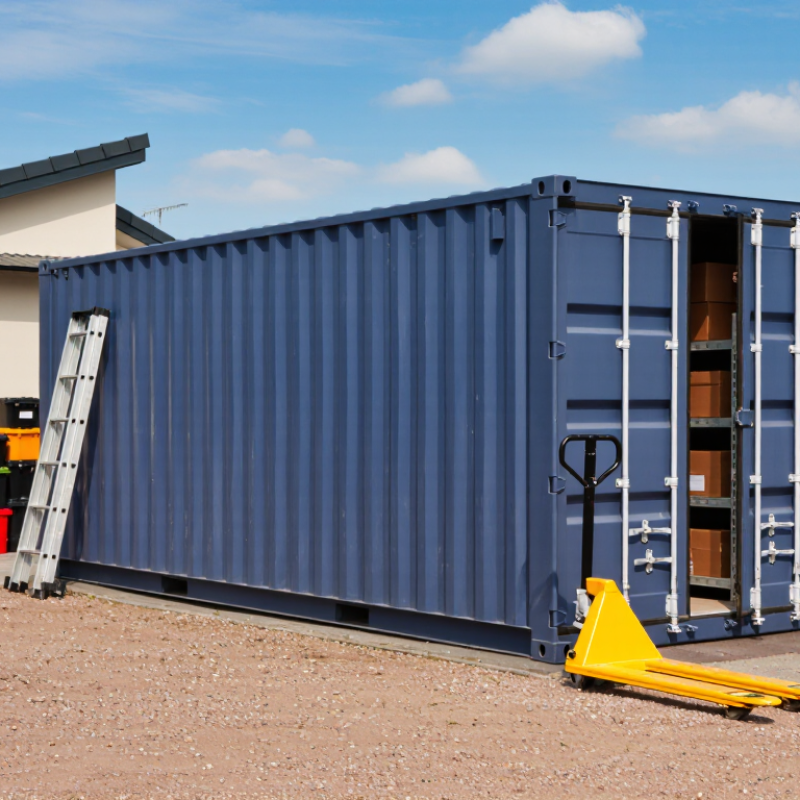
Built for demanding outdoor conditions.

Most containers use weathering steel with corrugated side panels. These ridges improve strength without adding excessive weight. The floor commonly combines marine-grade plywood with steel support beams. Corner posts carry the main load, while top and bottom rails connect the frame. Double doors usually include vertical locking bars, heavy hinges, and rubber seals. Small vents reduce condensation, although they cannot prevent every moisture problem.

A 10ft unit suits household items, tools, seasonal equipment, and organized site storage. It fits beside many buildings more easily than longer models. Before delivery, check ground access, turning space, and the base condition. A level foundation matters. Uneven support can stress the doors and frame. In practice, “weather-resistant” does not mean perfectly waterproof, especially around worn seals or damaged panels. I would inspect the roof, floor, vents, and locking hardware before loading valuable belongings. The smaller footprint is useful, but capacity disappears quickly when shelves or bulky equipment are added.

What Is a 10ft Storage Container and What Is It Used For? - Common Dimensions, Materials, and Structural Components

Data Dimension Typical Specification Common Material or Component Practical Information
Container Type Standard 10-foot storage container ISO-style steel container construction A compact, lockable unit used for storage, transport, site facilities, and temporary structures.
External Length Approximately 10 ft (3.05 m) Weather-resistant steel frame and panels The short footprint is suitable for locations where a 20-foot container would be too large.
External Width Approximately 8 ft (2.44 m) Corrugated steel side walls Transport and placement may require access for a delivery vehicle and lifting equipment.
External Height Approximately 8 ft 6 in (2.59 m) Steel roof and top side rails The standard height is usually selected where normal overhead clearance is available.
Internal Dimensions About 9 ft 2 in L × 7 ft 8 in W × 7 ft 10 in H
(2.80 m × 2.35 m × 2.39 m)
Interior lined by steel walls and a raised floor Actual measurements vary slightly by manufacturer, floor thickness, and container condition.
Door Opening Typically about 7 ft 8 in W × 7 ft 5 in H
(2.34 m × 2.26 m)
Double steel doors with locking bars The wide opening makes it easier to load boxed goods, tools, shelving, and small equipment.
Internal Volume Approximately 560–590 ft³
(15.9–16.7 m³)
Enclosed steel storage space Useful for household items, inventory, construction materials, seasonal goods, and equipment.
Floor System Heavy-duty timber floor panels supported by steel cross-members Marine-grade plywood, steel cross-members, and steel floor rails The floor is raised above the ground and should be inspected for moisture damage, pests, or weakened boards.
Wall and Roof Material Corrugated weather-resistant steel panels Corten-type or equivalent corrosion-resistant steel The corrugation improves rigidity while protective coatings help resist rain and environmental exposure.
Primary Structural Frame Perimeter frame with corner posts and top and bottom rails Welded structural steel The frame transfers loads and provides lifting, stacking, and support points.
Corner Fittings Eight reinforced corner castings Cast steel They are used with compatible lifting, handling, and securing equipment.
Door Security Two-leaf door, locking rods, handles, and lockable hasp area Galvanized or painted steel hardware A separate weatherproof padlock or protected lockbox can improve security.
Ventilation Small passive vents, usually positioned on side walls Steel vent housings with protective mesh Ventilation reduces condensation but does not provide climate control or complete moisture protection.
Approximate Tare Weight Roughly 2,000–2,700 lb
(900–1,225 kg)
Steel body, timber floor, doors, and fittings Weight varies with age, flooring, door design, repairs, and optional modifications.
Load Capacity Often rated for several tonnes, subject to the specific unit and transport rules Steel frame and reinforced floor structure Always verify the container’s data plate, floor condition, and local handling limits before loading heavily.
Common Storage Uses Tools, furniture, archives, stock, bicycles, machinery, and seasonal items Secure enclosed steel enclosure It provides more durable protection than many temporary fabric or plastic storage solutions.
Other Applications Workshops, site stores, garden storage, kiosks, and modified office spaces Modified steel shell with insulation, wiring, windows, or access doors Modifications should include appropriate ventilation, electrical work, drainage, insulation, and local code compliance.

Note: Dimensions and capacities are typical industry ranges. Exact specifications vary by construction standard, manufacturer, age, and modifications.

How a 10ft Storage Container Is Used in Different Settings

A 10ft storage container is a compact steel unit designed for secure, movable storage. It usually measures about ten feet long, although internal dimensions vary by design. Small footprint, serious capacity. Its rigid walls protect tools, stock, furniture, and equipment from rain, dust, and accidental impacts. A level base is essential because uneven ground can strain the doors and frame. Poor placement creates problems quickly.

On construction sites, the container can store power tools, fasteners, safety equipment, and sealed building materials. Shelving helps workers find small items without emptying every box. In retail settings, it provides backstock space when a shop has limited floor area. Market vendors may use one for seasonal displays and removable fixtures. Access matters. Wide door clearance and clear pathways make daily loading safer and faster. However, a container is not automatically suitable for temperature-sensitive goods. Heat can build up inside, even on mild sunny days.

At homes, it can hold bicycles, garden equipment, renovation supplies, or archived furniture. Farms may use it for clean, organized equipment storage, provided moisture is controlled. Offices and schools sometimes use units as temporary archives during repairs. Ventilation, lighting, drainage, and lock quality deserve careful inspection. Local placement rules may also apply. A rushed conversion can cost more than expected, so planning should include airflow, flooring, and safe weight distribution. Some users underestimate condensation. Regular checks remain necessary.

Advantages and Limitations of Choosing a 10ft Container

A 10ft storage container is a compact steel unit, usually about 10 feet long, 8 feet wide, and 8 feet 6 inches high. Internal measurements vary, so confirm them before planning shelves or equipment. Its smaller footprint suits narrow yards, construction sites, workshops, and small businesses. It can protect tools, furniture, seasonal stock, or archived documents from rain and dust when properly maintained.

The main advantage is flexibility. A 10ft container needs less ground space than larger units and is easier to position on a restricted site. It also offers strong security, weather resistance, and a lockable entry point. Transport and placement may be simpler, although access still depends on delivery equipment and ground conditions. The limitation is capacity. Bulky furniture, tall machinery, or expanding inventory can quickly fill the interior. Ventilation may also be limited, creating condensation in changing temperatures. Insulation, lighting, and electrical work require additional planning and professional installation. Small does not mean effortless.

Tips: Measure every item, including door clearance. Leave a walkway inside. Use pallets to keep boxes above the floor. Check the base for level support and drainage. Inspect the roof, seals, hinges, and locking area regularly. One detail is easy to miss: a dry container can still become humid. A basic moisture check helps protect stored materials. Be realistic about future space needs; choosing the smallest unit may save money today but cause inconvenience later.

What Is a 10ft Storage Container and What Is It Used For?

A 10ft storage container is a compact steel unit used for equipment storage, household items, tools, documents, and small-site logistics. Its smaller footprint makes it easier to place than larger containers, but it offers less storage capacity.

Chart explanation: A typical 10ft container provides approximately 15.9 m³ of internal storage volume, which is about half the capacity of a 20ft container and about one-quarter of a 40ft container. Actual dimensions and usable capacity may vary slightly by container design and manufacturer.

Advantages: Compact footprint, easier positioning in restricted spaces, lower space requirements, and practical access for smaller storage needs.

Limitations: Less internal volume, limited room for bulky goods, and potentially higher storage cost per cubic metre when compared with larger containers.

Key Factors for Selecting, Placing, and Maintaining One

A 10ft storage container offers about 15 cubic metres, or 560 cubic feet, of enclosed space. ISO 668:2020 sets standard external dimensions near 2.99 metres long and 2.44 metres wide. Internal measurements vary. Check the specification plate before planning shelves, pallets, or machinery.

Selection should begin with the load, not the container’s appearance. Confirm the maximum payload, floor condition, door width, ventilation, and corrosion level. A unit with sound corner posts may still have a damaged roof. I have seen buyers overlook door clearance, then discover that a loaded trolley cannot enter. Leave practical walking space. Dense items should sit low and near the centre. Uneven loading can stress the floor and make doors bind.

Placement deserves equal attention. Use a compacted, level base with concrete pads or steel supports under the corner castings. Keep water away from the doors. Check local planning, fire, access, and boundary requirements before delivery. UNCTAD’s Review of Maritime Transport 2024 highlights the continuing scale of containerized logistics, but a storage unit on private land faces different risks. Salt air, tree sap, and condensation can shorten its service life. Inspect seals, roof seams, locking bars, and underside areas every few months. Repair small rust spots early. The CSC Convention generally requires examination within five years, then at intervals not exceeding 30 months, unless an approved continuous examination system applies. That schedule may be unsuitable for a stationary unit in harsh weather. A local inspection is wiser.

Call free on
0800 1954 538